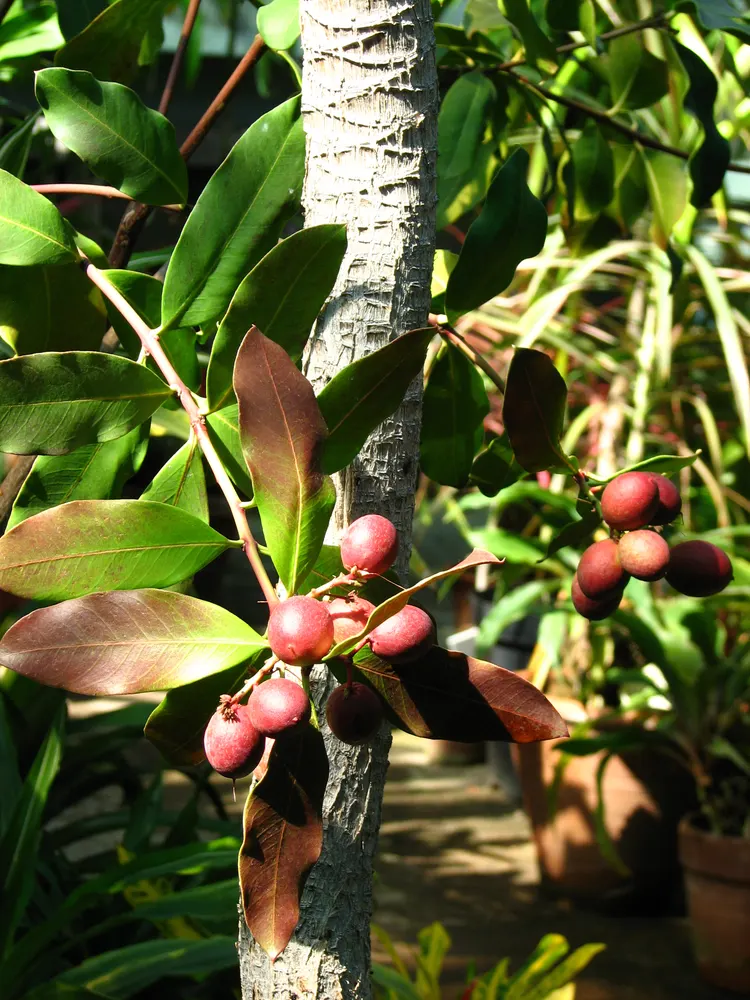
Photo: Kor!An (Корзун Андрей), CC BY-SA 3.0 (via Wikimedia Commons)
Bushman's Poison Bush
Acokanthera oblongifolia
Also known as Wintersweet, Dune Poison-Bush, Common Poison-Bush, Cape Bushman's Poison
Traditional uses
✦Acokanthera oblongifolia carries a name that tells you everything you need to know before you go further. For generations, San and other southern African hunter-gatherer peoples reduced the wood, bark, and latex of related Acokanthera species into a thick, dark poison paste that was smeared onto the tips of hunting arrows, prized precisely because a small wound could bring down large game. That history of respect and caution, not culinary or tonic use, is the entire traditional record of this plant. It has never held a place as a food, tea, or folk remedy, and it should not be treated as one now.
How to grow & use it
✦The full apothecary for Bushman's Poison Bush
Traditional remedies and step-by-step preparations, a complete growing guide, and how to harvest, dry, and store it, all unlocked with HerbLens Unlimited.
- ✦Remedies & preparations
- ✦ Growing guide
- ✦Harvest & storage
From under $6 a month. Free plant identifications always included.
“A plant to admire from a respectful distance, its beauty a quiet warning in itself.”
The genus name Acokanthera comes from the Greek for 'sharp point,' a nod to the plant's pointed leaves, but its lasting fame comes from the arrow poison itself. The purified glycoside from this plant group, called ouabain, was later isolated and studied by Western scientists for its powerful effects on the heart, the same chemical logic that once made it deadly on a hunter's arrow tip.
Acokanthera oblongifolia is highly toxic in every part, including its leaves, bark, wood, sap, and especially its seeds and fruit pulp before full ripeness. It contains potent cardiac glycosides, related to ouabain, that can cause dangerous heart rhythm disturbances, and historically the plant's sap was concentrated specifically to make lethal hunting-arrow poison. Ingesting any part of this plant, or introducing its sap to broken skin, eyes, or mucous membranes, can be seriously harmful or fatal, and it poses a particular hazard to children, pets, and livestock. There is no traditional food or medicinal use of this species, and it should never be brewed, chewed, or otherwise taken internally under any circumstances. If exposure or ingestion is suspected, contact emergency medical services or a poison control center immediately rather than attempting any home treatment. Anyone growing this plant ornamentally should handle it with gloves and site it thoughtfully, and should always consult a qualified professional, whether a physician, toxicologist, or extension horticulturist, with any concerns.