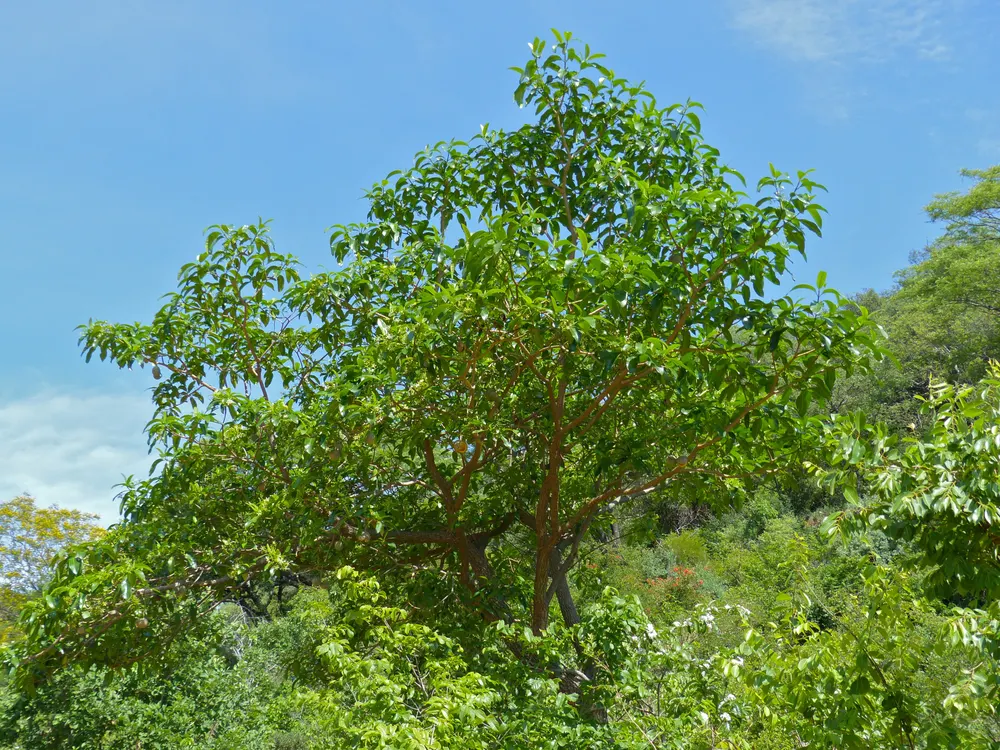
Photo: Bernard DUPONT from FRANCE, CC BY-SA 2.0 (via Wikimedia Commons)
Toad Tree
Tabernaemontana elegans
Also known as Elegant Tabernaemontana, Bushveld Toad Tree, umHlambamanzi (Zulu)
Key benefits
✦Traditional uses
✦In parts of southern Africa, the toad tree has long held a place in Zulu and Sotho traditional medicine, where healers prepared the bark and root for a range of serious complaints, including snakebite, wounds, and stomach ailments. It earned its common name from its remarkable fruit: paired, knobbly pods that split open to reveal seeds wrapped in a sticky orange-red coat, said to resemble a toad's mottled hide. Because the plant's alkaloid-rich bark and latex demand real expertise to prepare safely, its use has always stayed in the hands of trained healers rather than the household kitchen. Today it is better known and more widely enjoyed as a handsome, low-maintenance ornamental and wildlife tree.
How to grow & use it
✦The full apothecary for Toad Tree
Traditional remedies and step-by-step preparations, a complete growing guide, and how to harvest, dry, and store it, all unlocked with HerbLens Unlimited.
- ✦Remedies & preparations
- ✦ Growing guide
- ✦Harvest & storage
From under $6 a month. Free plant identifications always included.
- ✦Indigenous bushveld companions like Vachellia (thorn acacia) species for a naturalistic African garden planting
- ✦Wild dagga (Leonotis leonurus) as a flowering companion that also draws pollinators
- ✦None offered, since this plant is not used as a home herbal remedy
“For the gardener drawn to the strange and beautiful, a tree whose fruit wears a toad's own skin.”
The toad tree's paired seed pods are so oddly warty and mottled that early namers thought they looked like a toad crouched in the branches, and when the pods split, the seeds inside are dressed in a bright orange-red sticky coat that birds find irresistible, helping scatter the tree far from its parent.
Tabernaemontana elegans is not a plant for home teas, tinctures, or kitchen use. Like many members of the dogbane family, it produces a milky latex that is a known skin and eye irritant, and its bark, root, and latex contain alkaloids that traditional healers in southern Africa historically reserved for carefully measured preparations aimed at serious conditions like snakebite, handled only with specialized training. That same history is itself a signal of real potency and risk rather than a safe home remedy. All parts of this plant should be treated as unsafe to ingest, and it should be kept well away from children and pets, who may be drawn to its bright, toad-skin seed coats. Wear gloves when pruning or handling cut stems to avoid latex contact with skin or eyes. This entry is for garden and natural history interest only. Do not attempt any medicinal preparation from this plant without guidance from a qualified healthcare professional or toxicologist familiar with it.