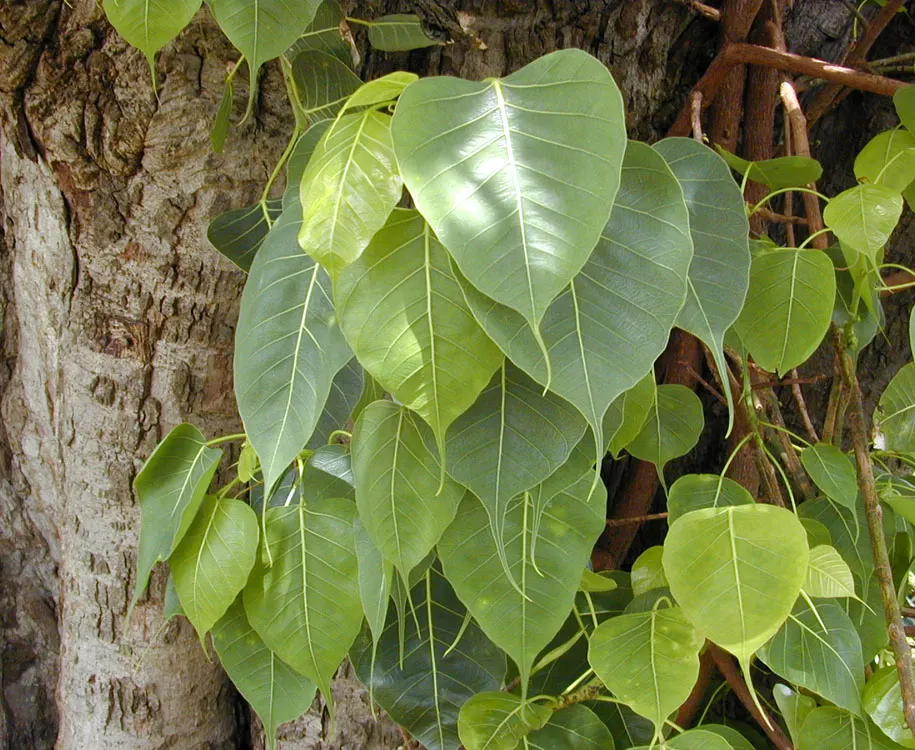
Photo: Eric Guinther, CC BY-SA 3.0 (via Wikimedia Commons)
Sacred Fig
Ficus religiosa
Also known as Bodhi Tree, Peepal, Pipal, Ashwattha, Bo Tree
Key benefits
✦Traditional uses
✦Few trees carry more weight in human history than the sacred fig. It was beneath one of these trees in Bodh Gaya that Siddhartha Gautama is said to have sat in meditation and reached enlightenment, and its descendants are still tended as living shrines across Buddhist and Hindu communities today. Long before it became a religious icon, though, it was already a fixture of household Ayurvedic medicine, where the astringent bark, the broad heart shaped leaves, and the small ripe figs were each turned to their own traditional purpose, from soothing skin to settling the stomach. In many villages, no part of the tree was considered ordinary, and even its shade was thought to carry a kind of quiet blessing.
How to grow & use it
✦The full apothecary for Sacred Fig
Traditional remedies and step-by-step preparations, a complete growing guide, and how to harvest, dry, and store it, all unlocked with HerbLens Unlimited.
- ✦Remedies & preparations
- ✦ Growing guide
- ✦Harvest & storage
From under $6 a month. Free plant identifications always included.
- ✦Turmeric
- ✦Licorice root
- ✦Neem
- ✦Banyan bark (Ficus benghalensis)
- ✦Plain black tea, for a comparable gentle astringency
“For the quiet, unhurried calm of a temple courtyard, steeped into a single cup.”
The tree still growing at the Mahabodhi Temple in Bodh Gaya today is a direct descendant of the original Bodhi Tree, grown from a cutting of a cutting passed down over more than two thousand years, including one famously sent to Sri Lanka in the third century BCE that survives there still.
The milky latex in sacred fig's bark, leaves, and unripe fruit can irritate skin and may trigger a reaction in people with a latex allergy. Traditional bark preparations may add to the effect of diabetes medication, so caution is warranted.