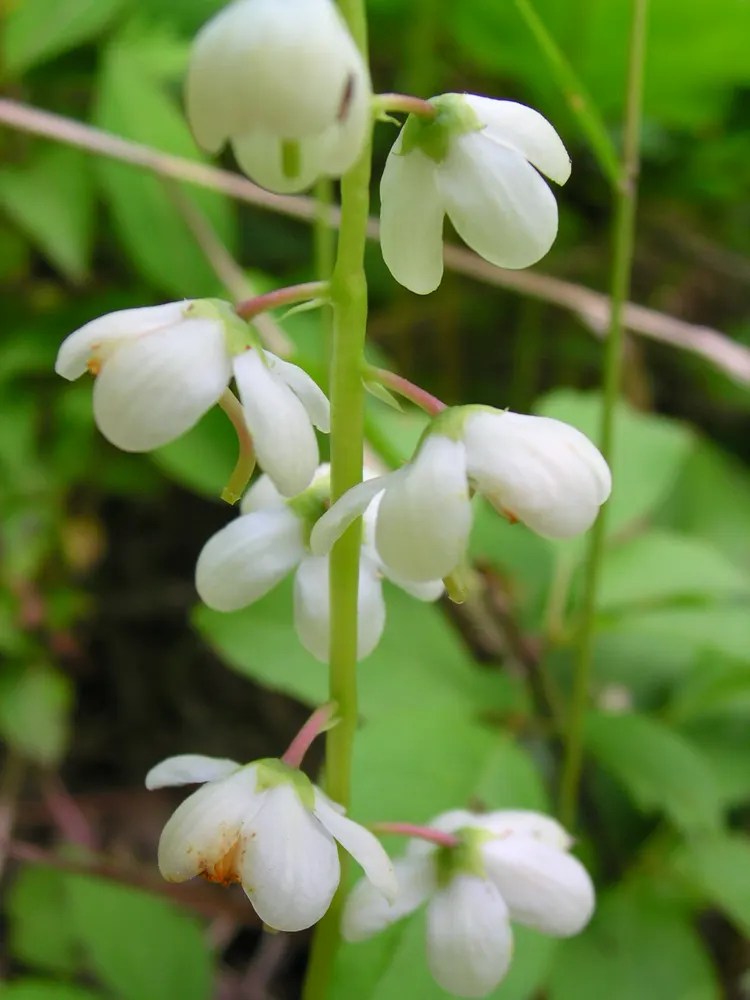
Photo: Superior National Forest, CC BY 2.0 (via Wikimedia Commons)
Shinleaf
Pyrola elliptica
Also known as Shinleaf, Waxflower Shinleaf, Elliptic-leaved Wintergreen, Largeleaf Wintergreen
Key benefits
✦Traditional uses
✦Long before it had a Latin name, shinleaf was quietly at work in the medicine bundles of Ojibwe, Potawatomi, and other Algonquian peoples, who crushed or steeped its leathery evergreen leaves into a wash for wounds, ulcers, and sores. Its common name comes from an old folk habit of binding the bruised leaves directly against a sore shin, a remedy said to have been favored by loggers and woodsmen nursing the daily knocks of forest work. Settlers picked up the practice from Native neighbors, and shinleaf found its way into home medicine chests as a mild, dependable green for skin troubles. It never became a famous herb, but in the quiet corners of the deep woods where it grows, it earned a steady, practical reputation.
How to grow & use it
✦The full apothecary for Shinleaf
Traditional remedies and step-by-step preparations, a complete growing guide, and how to harvest, dry, and store it, all unlocked with HerbLens Unlimited.
- ✦Remedies & preparations
- ✦ Growing guide
- ✦Harvest & storage
From under $6 a month. Free plant identifications always included.
- ✦Plantain
- ✦Self-heal
- ✦Yarrow
- ✦Uva ursi (bearberry)
- ✦Wintergreen
“For a quiet, woodland-gathered wash to ease a bruise or a scrape, steeped the way it was in cabins under the pines.”
Shinleaf is only partly self-sufficient. Beneath the soil, its roots tap into a shared network of mycorrhizal fungi connected to nearby trees, quietly borrowing sugars the way a forager might borrow a neighbor's tools, which is part of why it resists being dug up and moved.
Shinleaf's traditional use as a topical wash for bruises is folk history rather than established science. Like its relative uva ursi, it contains tannins and arbutin-type compounds, so it isn't recommended for internal use, especially during pregnancy, nursing, or with kidney concerns.