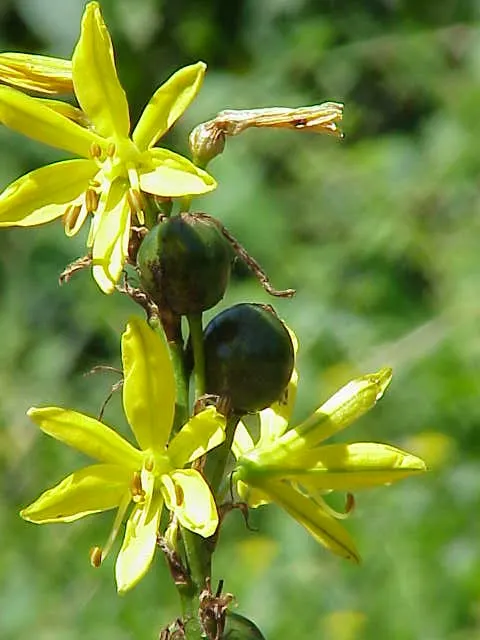
Photo: CC BY-SA 3.0 (via Wikimedia Commons)
Yellow Asphodel
Asphodeline lutea
Also known as King's Spear, Jacob's Rod, Asphodel
Key benefits
✦Traditional uses
✦Long before it was a garden favorite, yellow asphodel grew wild across the stony hills of Greece, Italy, and the wider Mediterranean, where its cousins gave the whole asphodel tribe a place in legend, the pale flowered meadows Homer imagined the dead wandering through in the underworld. In leaner rural seasons, country people dug the starchy tubers of wild asphodels, roasted or boiled them at length to tame their natural bitterness, and ground them into a rough flour or paste, a practice recorded from ancient Greece through more recent Mediterranean famine years. The plant's tall, spear-straight flowering stalks also earned it a long life as a dried and cut flower, prized for their vertical form. Today Yellow Asphodel is grown chiefly for beauty rather than the table, valued as an heirloom cottage and rock garden plant with a history far older than most of its border companions.
How to grow & use it
✦The full apothecary for Yellow Asphodel
Traditional remedies and step-by-step preparations, a complete growing guide, and how to harvest, dry, and store it, all unlocked with HerbLens Unlimited.
- ✦Remedies & preparations
- ✦ Growing guide
- ✦Harvest & storage
From under $6 a month. Free plant identifications always included.
- ✦Lavender
- ✦Rosemary
- ✦Sedum
- ✦Foxtail lily (Eremurus)
- ✦Common asphodel (Asphodelus albus)
“For the gardener who wants a wild Mediterranean hillside brought home in a single, sun-loving spike.”
In Homer's Odyssey, the spirits of the dead wander the "asphodel meadows," a pale, flowering underworld field that later poets, including Virgil, borrowed and retold, making this humble Mediterranean wildflower one of the oldest plants on record tied to the afterlife.
Do not eat or brew any part of yellow asphodel. Its roots have caused liver damage and severe sun-sensitive skin reactions in grazing livestock, and there is no reliably safe way to prepare it for people today. Enjoy it only as an ornamental.