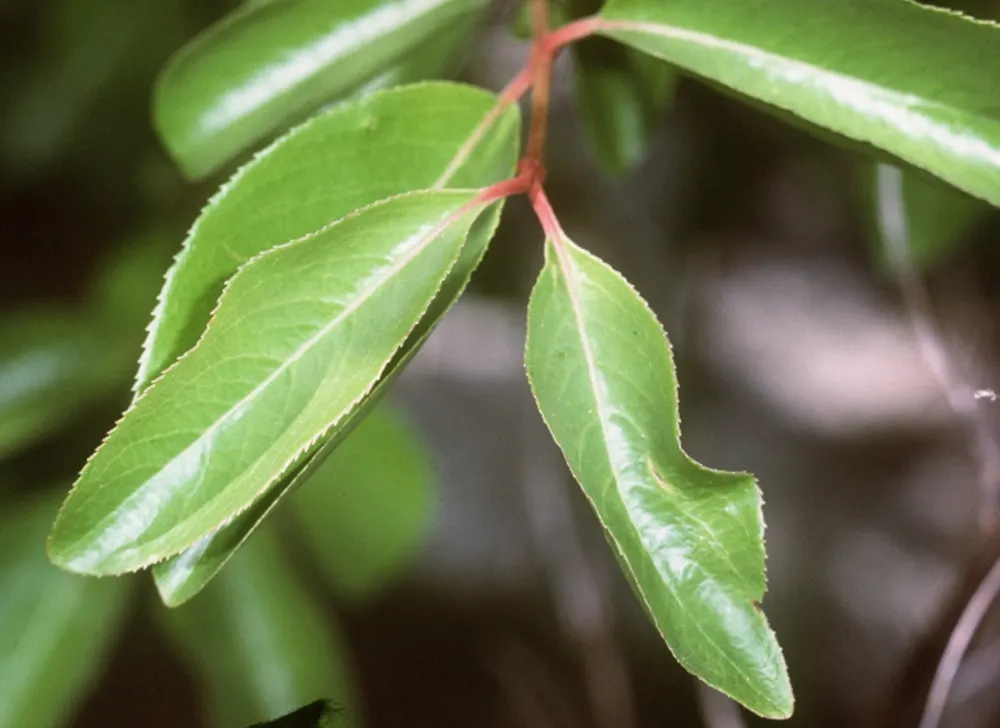
Photo: Robert H. Mohlenbrock. USDA SCS, Public domain (via Wikimedia Commons)
Black Haw
Viburnum prunifolium
Also known as Stagbush, Sloe-Leaved Viburnum, Sweet Haw, American Sloe
Key benefits
✦Traditional uses
✦Black haw has long stood beside its close cousin cramp bark as one of the great womb tonics of American herbalism, its stripped bark simmered into decoctions by midwives, Eclectic physicians, and rural households alike. Indigenous peoples of the eastern woodlands used the bark and berries for a range of complaints before European settlers adopted it, and by the nineteenth century it had earned a steady place in physicians' bags as a remedy to ease painful cramping and settle an unsettled womb. It was official in the United States Pharmacopoeia for decades, a rare honor for a native shrub, prescribed with real seriousness rather than folk whimsy. Herbalists today still reach for it first when cramping, whether monthly or otherwise, calls for something gentle but dependable.
Growing guide
✦Fresh to dried
✦Traditional preparations
✦Black Haw Bark Decoction
The traditional way to draw the constituents out of black haw's tough bark, gently simmered rather than steeped.
How it's made. Traditionally, 1 teaspoon of dried, cut black haw bark is simmered in 1 cup of water for about 15 minutes, then strained. A small cup is taken as needed.
Black Haw Tincture
A concentrated liquid extract, favored by herbalists for its convenience and long shelf life.
How it's made. Traditionally prepared by a professional herbalist or purchased ready-made from a reputable supplier, and taken in small, measured drops according to label guidance.
- ✦Cramp bark (Viburnum opulus)
- ✦Ginger root
- ✦Raspberry leaf
- ✦Cramp bark (Viburnum opulus)
- ✦Cinnamon bark
“For the ache that asks for something rooted, steady, and unhurried.”
Black haw earned a place in the official United States Pharmacopoeia from 1882 to 1926, where it was listed specifically to help prevent threatened miscarriage, a striking level of formal recognition for a hedgerow shrub most people today only know for its inky autumn berries.
Black haw bark contains aspirin-like compounds, so avoid it if you're sensitive to salicylates, and use caution with blood thinners. Its oxalate content means those prone to kidney stones should avoid it, and it should only be used in pregnancy under a midwife or physician's guidance.