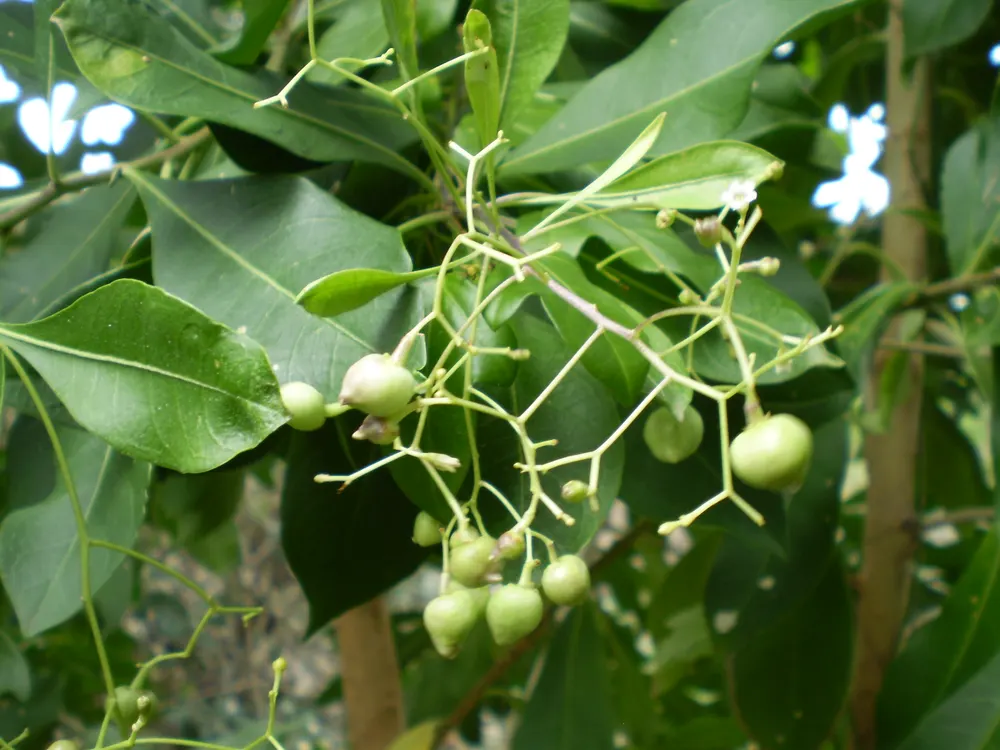
Photo: John Moss, Public domain (via Wikimedia Commons)
Corkwood Tree
Duboisia myoporoides
Also known as Corkwood, Soft Corkwood, Duboisia, Pituri Bush (regional name, sometimes used loosely across Duboisia species)
Key benefits
✦Traditional uses
✦For countless generations, Aboriginal Australians recognized Duboisia myoporoides as one of the continent's most potent plants. Specially prepared leaf was chewed as a powerful stimulant and used in ceremony by some groups, while crushed foliage was used to stupefy fish in waterholes, a practical use of the plant's strength rather than a sign of its safety. Early European settlers in Queensland also observed Aboriginal people using the plant's juice to dilate their pupils, an observation that helped lead pharmacologists to the tropane alkaloids scopolamine and hyoscyamine locked within its leaves. That discovery turned this modest, corky-barked shrub into one of the most commercially significant medicinal plants on earth, and Australia remains today the world's leading source of natural scopolamine for the pharmaceutical industry, though every part of that story has always depended on expert handling rather than casual use.
How to grow & use it
✦The full apothecary for Corkwood Tree
Traditional remedies and step-by-step preparations, a complete growing guide, and how to harvest, dry, and store it, all unlocked with HerbLens Unlimited.
- ✦Remedies & preparations
- ✦ Growing guide
- ✦Harvest & storage
From under $6 a month. Free plant identifications always included.
“A plant to admire from a respectful distance, and to leave to the experts who know how to handle it.”
Early Queensland settlers noticed Aboriginal Australians using the juice of this plant to dilate their pupils long before Western medicine used atropine-like eye drops, an observation that eventually helped chemists isolate scopolamine and turn this unassuming Australian corkwood into the world's leading natural source of the compound now used in modern motion-sickness patches and pre-surgical medicine.
Duboisia myoporoides is toxic, and no part of it should ever be eaten, brewed as tea, smoked, or otherwise self-administered at home. Its leaves contain high concentrations of the tropane alkaloids scopolamine (hyoscine) and hyoscyamine, the same potent compound family found in datura and henbane. Even small amounts of leaf, seed, or sap can cause severe anticholinergic poisoning, with symptoms including dilated pupils, dry mouth, flushed skin, a racing heart, agitation, hallucinations, delirium, seizures, coma, and death. Historically, Aboriginal Australians chewed specially prepared leaf as a potent stimulant using deep traditional knowledge, and used crushed foliage to stupefy fish for capture, both practices that reflect the plant's power rather than any general safety for casual use. Today the species is grown almost exclusively as a tightly regulated pharmaceutical crop, its alkaloids extracted industrially to manufacture prescription scopolamine and related medicines for conditions like motion sickness and as a pre-surgical medication. It should never be foraged, harvested, or prepared at home, and anyone who may have ingested it or been exposed to its sap or smoke and is showing signs of poisoning needs emergency medical attention right away. Please always consult a qualified medical professional or toxicologist regarding this plant rather than attempting any home use.