Photo: Dalgial, CC BY-SA 3.0 (via Wikimedia Commons)
Queen Coralbead
Cocculus trilobus
Also known as Cocculus orbiculatus (synonym), Mu Fang Ji, Japanese snailseed, Coral-bead vine
Key benefits
✦Traditional uses
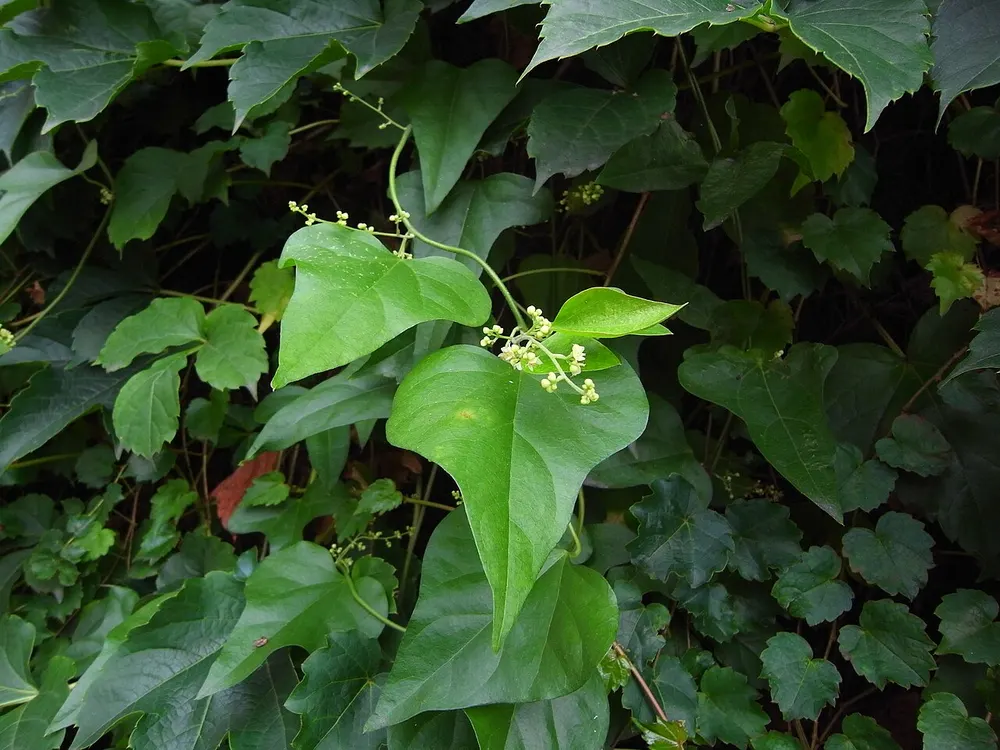
✦In the villages and hedgerows of China, Japan, and Korea, Cocculus trilobus has long been known by its root, dug in autumn and dried for use in traditional Chinese medicine under the name Mu Fang Ji. Practitioners traditionally reached for it to ease the heavy, aching joints described as wind-damp, and to help move stagnant fluid from swollen limbs. Its twining vines and strings of small blue-black fruit, resembling strung coral beads, made it easy to recognize along forest edges even by those who never touched its root. Because its close relatives include some of the most potent alkaloid-bearing plants in the world, from South American curare vines to the fish-stunning berries of Anamirta cocculus, Mu Fang Ji has always been treated as serious medicine, measured out by trained hands rather than kept in the kitchen cupboard.
How to grow & use it
✦The full apothecary for Queen Coralbead
Traditional remedies and step-by-step preparations, a complete growing guide, and how to harvest, dry, and store it, all unlocked with HerbLens Unlimited.
- ✦Remedies & preparations
- ✦ Growing guide
- ✦Harvest & storage
From under $6 a month. Free plant identifications always included.
- ✦Astragalus root (Huang Qi)
- ✦Atractylodes (Bai Zhu)
- ✦Job's tears (Coix seed)
- ✦Stephania tetrandra (Han Fang Ji)
- ✦Sinomenium acutum
“For the vine of coral beads and old apothecary roots, respected more than reached for.”
Cocculus trilobus belongs to the moonseed family, Menispermaceae, the very family that gave South American healers the curare vines used to tip hunting arrows, a reminder of just how potent this plant family's chemistry can be.
Cocculus trilobus is not a kitchen herb. Its root contains isoquinoline alkaloids, including trilobine and related compounds, that can cause nausea, vomiting, or more serious effects if the plant is misidentified, over-prepared, or taken in excess. The wider family, Menispermaceae, includes some of the most potent alkaloid-bearing plants known, from the curare vines of South America to the picrotoxin-rich berries of Anamirta cocculus, so correct identification and professional sourcing matter enormously. In traditional Chinese medicine, the closely related but sometimes confused "fang ji" herbs have occasionally been adulterated with toxic Aristolochia species, leading to serious kidney harm, so buying from a reputable, properly identified source is essential. This plant should not be used during pregnancy or nursing, is not appropriate for self-prescribed home remedies, and should only be taken, if at all, under the direct guidance of a qualified, licensed herbal or TCM practitioner who can confirm correct species and safe handling.