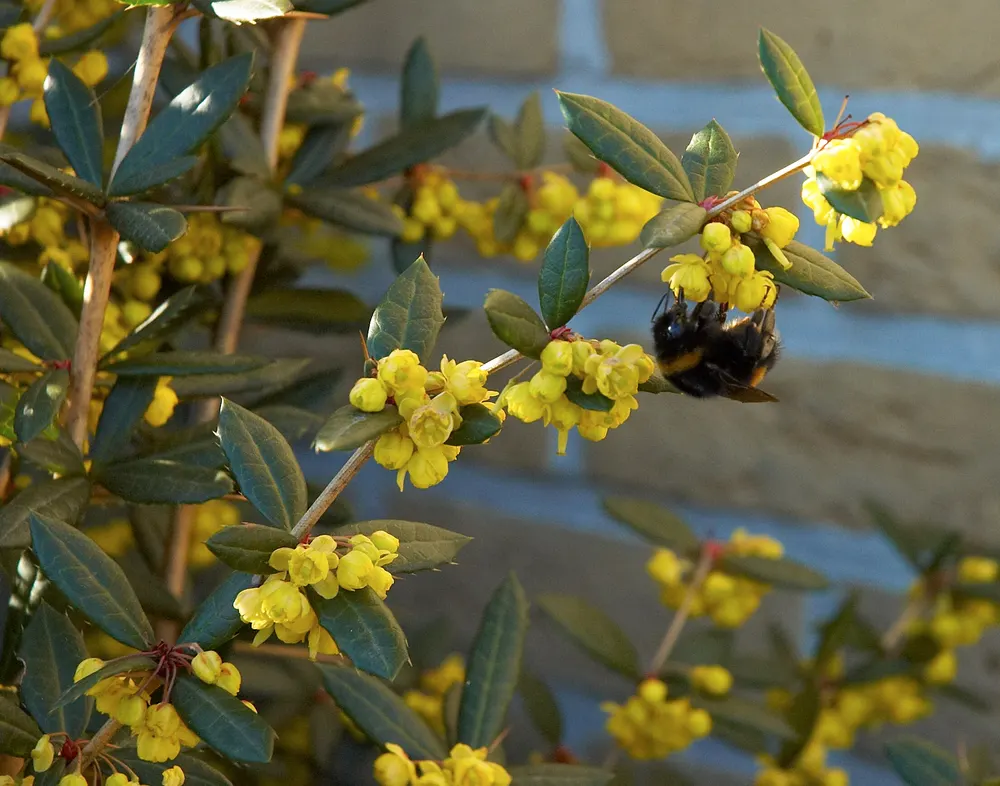
Photo: Wouter Hagens, Public domain (via Wikimedia Commons)
Wintergreen Barberry
Berberis julianae
Also known as Chinese Barberry, Juliana Barberry
Key benefits
✦Traditional uses
✦Wintergreen barberry is, first and foremost, a garden workhorse: gardeners across the world have prized its dense, glossy, spine-edged foliage for hedging that nothing dares push through, and its cheerful yellow spring flowers give way to blue-black berries that carry it into autumn. Like its many barberry cousins, its inner bark and roots carry the bright yellow alkaloid berberine, and across cultures the genus Berberis has long been steeped as a bitter tonic to rouse a tired appetite and ease a heavy stomach. Wintergreen barberry itself is used less often in this way than its better documented relatives, European barberry and tree turmeric, so most of what is known about it traditionally speaks to its garden virtues rather than its medicine chest ones.
How to grow & use it
✦The full apothecary for Wintergreen Barberry
Traditional remedies and step-by-step preparations, a complete growing guide, and how to harvest, dry, and store it, all unlocked with HerbLens Unlimited.
- ✦Remedies & preparations
- ✦ Growing guide
- ✦Harvest & storage
From under $6 a month. Free plant identifications always included.
- ✦Dandelion root
- ✦Ginger root
- ✦Licorice root
- ✦Oregon grape root (Mahonia aquifolium)
- ✦Goldenseal (Hydrastis canadensis)
“When the garden calls for a thorny, gold-veined sentinel that stands its ground through every season, needle-sharp and unbothered by winter.”
Slice into a barberry stem and the wood beneath the bark glows a startling egg-yolk yellow. That color comes from berberine, an alkaloid so closely tied to this plant family that it takes its very name from the genus Berberis, and the same bright wood was once used by dyers to color wool and leather.
Berberine in the bark should not be used during pregnancy or breastfeeding and must never be given to infants, since it has been linked to a serious jaundice complication called kernicterus. It can also interact with blood thinners, blood sugar medication, and liver-processed drugs, and the plant's spines can cause painful puncture wounds.