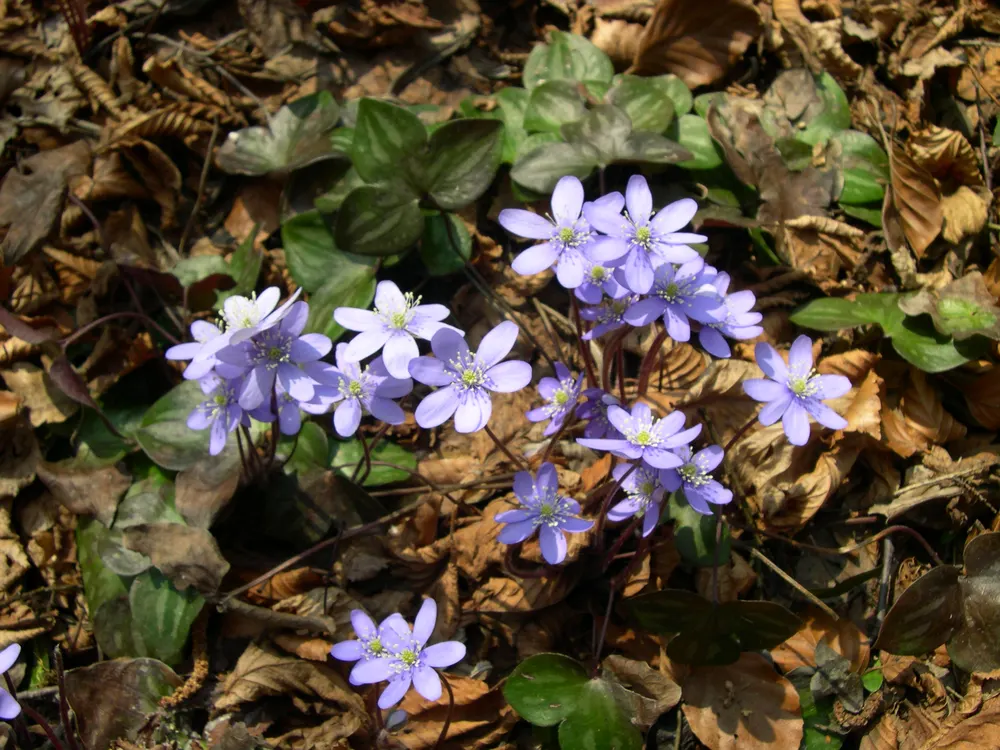
Photo: CC BY-SA 3.0 (via Wikimedia Commons)
Liverleaf
Hepatica nobilis
Also known as Liverwort, Kidneywort, Noble Liverleaf, Anemone hepatica (older name)
Key benefits
✦Traditional uses
✦Long before it was called hepatica, this modest woodland flower was prized under the old doctrine of signatures: herbalists across medieval and Renaissance Europe looked at its three-lobed, liver-shaped leaves and concluded it must hold power over the liver itself. From that belief grew a long apothecary tradition, and the dried herb, once sold under the name Herba Hepaticae, was steeped into teas taken for a sluggish liver, jaundice, and digestive complaints, as well as for coughs and lingering colds. By the nineteenth century it was still a fixture in many European household medicine chests, even as physicians of the day increasingly doubted its real effectiveness. Today hepatica is treasured far more as one of the very first flowers to break winter's hold on the forest floor than as a remedy.
How to grow & use it
✦The full apothecary for Liverleaf
Traditional remedies and step-by-step preparations, a complete growing guide, and how to harvest, dry, and store it, all unlocked with HerbLens Unlimited.
- ✦Remedies & preparations
- ✦ Growing guide
- ✦Harvest & storage
From under $6 a month. Free plant identifications always included.
- ✦Dandelion root
- ✦Mullein
- ✦Coltsfoot
- ✦Dandelion root or milk thistle for traditional liver support
- ✦Mullein for traditional respiratory use
“For the first bloom to blush up through last autumn's fallen leaves, proof that winter has finally loosened its grip on the woods.”
The name hepatica comes from the Greek word for liver, hepar, and it is no accident: the plant's three-lobed leaf, which can even show a mottled, liver-like coloring in winter, convinced generations of herbalists under the old doctrine of signatures that nature had marked this little flower for treating the liver.
The fresh plant contains protoanemonin, an acrid compound that can cause blistering, mouth burning, and digestive upset if chewed or eaten raw; drying reduces this, but reliable dosing data is lacking, so it's best kept as a garden plant rather than a home remedy. Avoid during pregnancy, and source from nurseries since it's slow-growing and of conservation concern in the wild.