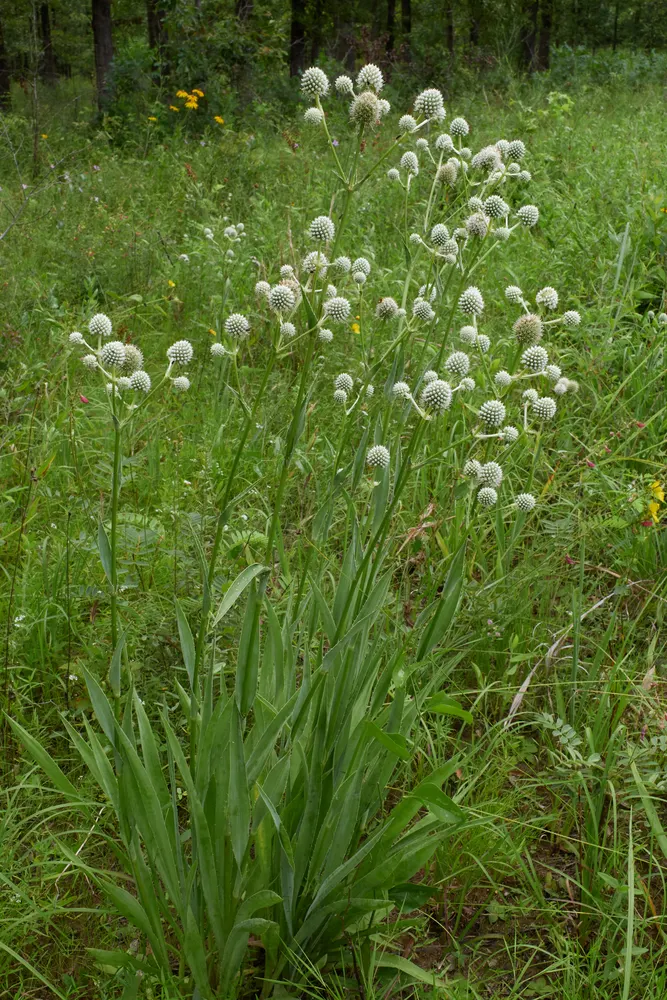
Photo: Eric Hunt, CC BY-SA 4.0 (via Wikimedia Commons)
Rattlesnake Master
Eryngium yuccifolium
Also known as Button Snakeroot, Button Eryngo, Rattlesnake Weed
Key benefits
✦Traditional uses
✦Rattlesnake master earned its startling name from an old folk belief, held by settlers and passed down through Southeastern tribal traditions, that a preparation of the root could counteract the venom of a rattlesnake bite. Its more documented traditional role was different: several Native peoples of the tallgrass prairie and Southeast, prepared the root as a powerful emetic used in purification ceremonies, and it appeared in folk remedies for coughs and other respiratory complaints. Long before it was studied by botanists, its tough, spiky, parallel-veined leaves, so unlike anything else in the carrot family, were noticed and split by Native artisans to weave sandals and cordage, much as true yucca leaves were used elsewhere. Today it survives mostly as a beloved anchor of prairie restoration gardens rather than as a working medicine cabinet herb.
How to grow & use it
✦The full apothecary for Rattlesnake Master
Traditional remedies and step-by-step preparations, a complete growing guide, and how to harvest, dry, and store it, all unlocked with HerbLens Unlimited.
- ✦Remedies & preparations
- ✦ Growing guide
- ✦Harvest & storage
From under $6 a month. Free plant identifications always included.
- ✦Echinacea (purple coneflower)
- ✦Butterfly milkweed
- ✦Little bluestem grass
- ✦Compass plant
- ✦Blazing star (Liatris)
“For the wild, silver-green heart of a tallgrass prairie, standing tall with its curious button blooms humming with bees.”
Despite belonging to the carrot family alongside parsley and dill, rattlesnake master grows spiky, parallel-veined leaves so convincingly yucca-like that early botanists and Native artisans alike treated it as an honorary yucca, splitting its fibrous leaves to weave sandals and rope just as they did with true yucca plants.
The root was traditionally used as a strong emetic to deliberately induce vomiting, and careless use can cause significant nausea and digestive upset. Despite the name, it has no evidence of treating snakebite, which is always a medical emergency.