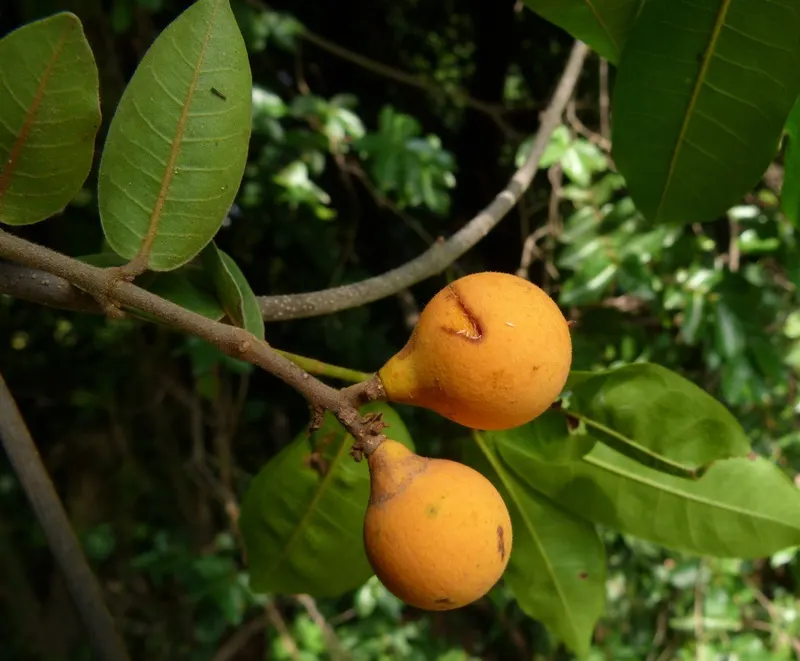
Photo: Bamba Tubaab, CC BY-SA 4.0 (via Wikimedia Commons)
Landolphia Vine
Landolphia heudelotii
Also known as African Rubber Vine, West African Landolphia, Gummivine
Key benefits
✦Traditional uses
✦Landolphia heudelotii has long been a familiar sight at the edge of West African villages and savanna woodlands, its climbing stems rewarding patient foragers with clusters of tart, orange fleshed fruit. For generations, communities across Senegal, Mali, Guinea, and neighboring countries have gathered the ripe pods to eat straight from the vine or work into a refreshing pulp drink, especially welcome in the dry season when few other fruits are on hand. Its milky latex was once tapped and traded as a source of natural rubber, a quiet chapter of West African history that predates the plantation rubber of Southeast Asia and Brazil. Beyond the fruit, the leaves and roots have found a place in local folk practice, though these traditional uses are far less documented than the fruit itself.
How to grow & use it
✦The full apothecary for Landolphia Vine
Traditional remedies and step-by-step preparations, a complete growing guide, and how to harvest, dry, and store it, all unlocked with HerbLens Unlimited.
- ✦Remedies & preparations
- ✦ Growing guide
- ✦Harvest & storage
From under $6 a month. Free plant identifications always included.
- ✦Hibiscus (bissap)
- ✦Baobab fruit pulp
- ✦Tamarind
- ✦Saba senegalensis (madd), its closest botanical relative and culinary stand-in
- ✦Hibiscus (bissap) for a similarly tart wild drink
“For a taste of the savanna, tart and sun-warmed straight off the vine.”
Before Brazilian and Southeast Asian plantations came to dominate the market, several Landolphia species, including L. heudelotii, were tapped across West and Central Africa as a major wild source of natural rubber, some of it shipped to Europe during the rubber boom of the late 1800s.
Only the fully ripe fruit pulp is traditionally eaten; the latex, unripe fruit, and seeds aren't established as safe and can irritate skin and mucous membranes. This plant is unrelated to the ornamental rubber vine (Cryptostegia grandiflora), which is genuinely toxic to humans and livestock, so don't confuse the two.