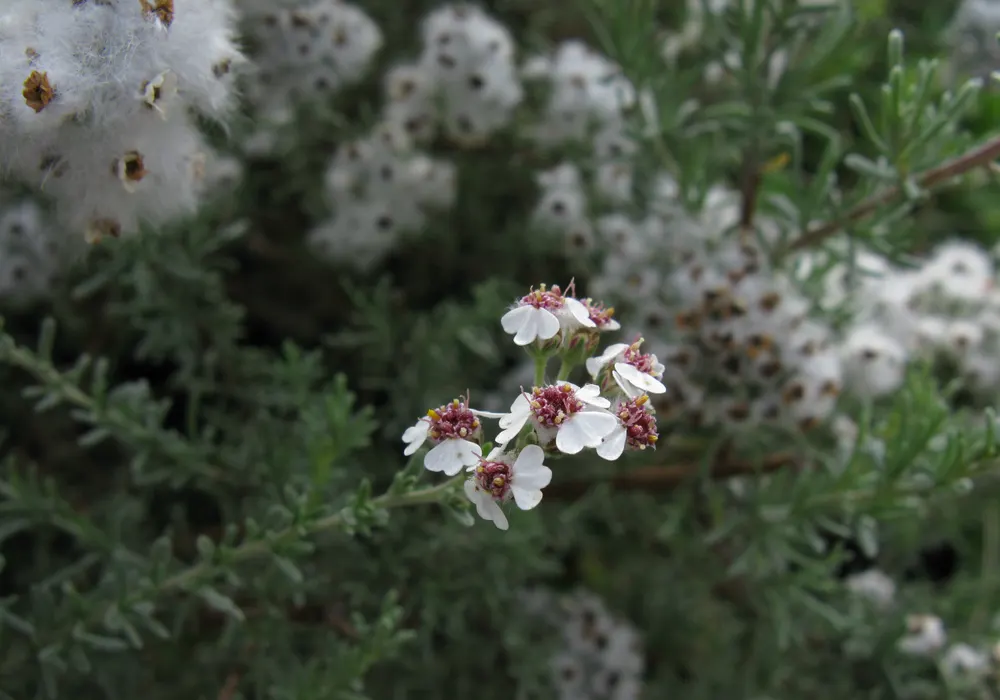
Photo: JonRichfield, CC BY-SA 3.0 (via Wikimedia Commons)
Wild Rosemary
Eriocephalus africanus
Also known as Cape Rosemary, Kapokbossie, Wild Camphor Bush, Cape Snow Bush, African Rosemary
Key benefits
✦Traditional uses
✦Long before it found its way into gardens abroad, wild rosemary was a trusted remedy along South Africa's Cape coast, where the Khoi people and later Cape Dutch settlers steeped its silvery, resinous leaves into a warming tea for coughs, colds, and fever. It became a fixture of the region's boerehuismiddels, the home remedies passed down through generations of farm households, valued for calming an upset stomach and easing menstrual cramps. Cooks learned early on that its rosemary-like fragrance was just as at home on the coals, and sprigs were laid over roasting lamb and game to perfume the meat as it cooked. It remains, to this day, equally at home in the kitchen and in the medicine cupboard.
How to grow & use it
✦The full apothecary for Wild Rosemary
Traditional remedies and step-by-step preparations, a complete growing guide, and how to harvest, dry, and store it, all unlocked with HerbLens Unlimited.
- ✦Remedies & preparations
- ✦ Growing guide
- ✦Harvest & storage
From under $6 a month. Free plant identifications always included.
- ✦Buchu
- ✦Honeybush
- ✦Lemon verbena
- ✦Culinary rosemary
- ✦Sage
“For a fragrant, hearth-side tea that carries the scent of the Cape fynbos in every cup.”
The Afrikaans name kapokbossie means 'snow bush,' a nod to the plant's fluffy white seed heads that blanket the fynbos slopes after flowering, looking for all the world like a dusting of snow in a landscape that never sees it.
Wild rosemary is not related to true rosemary despite the name, and as a daisy-family plant it may cause allergic reactions in those sensitive to ragweed or chamomile. It has traditionally been used to bring on menstrual flow, so medicinal amounts are best avoided in pregnancy.