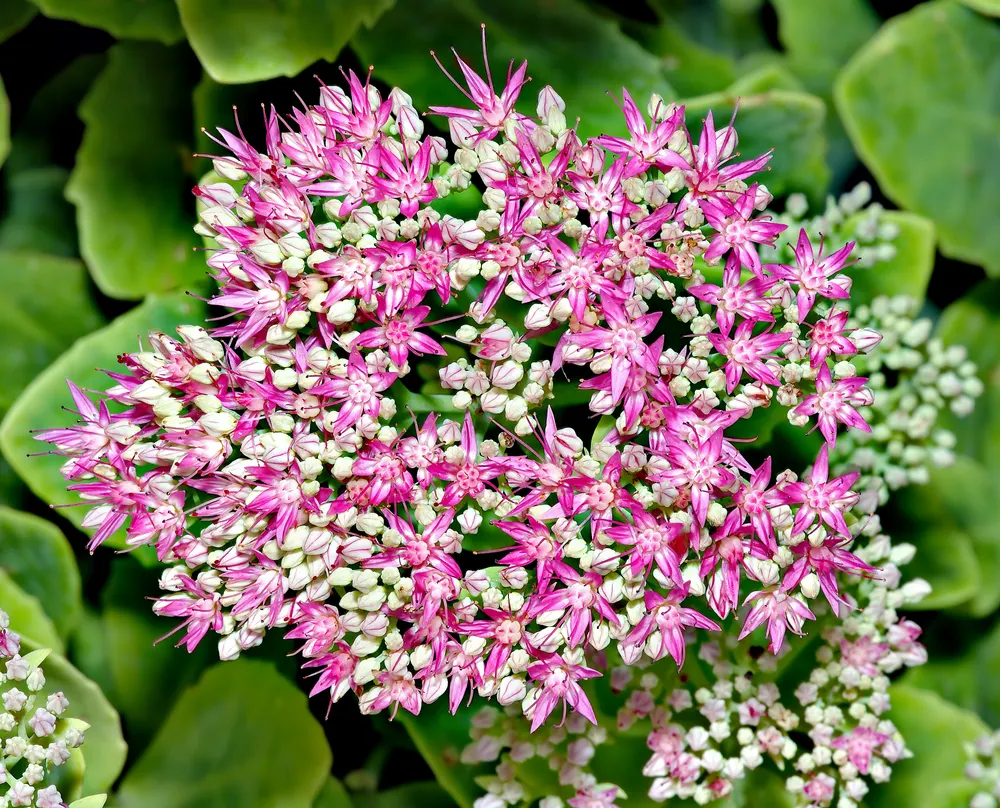
Photo: André Karwath aka Aka, CC BY-SA 2.5 (via Wikimedia Commons)
Showy Stonecrop
Hylotelephium spectabile
Also known as Showy Sedum, Live-forever, Butterfly Stonecrop, Iceplant (informal, unrelated to true ice plants)
Key benefits
✦Traditional uses
✦Showy stonecrop has long been a beloved border plant, prized less for the medicine chest than for the way its thick, dinner-plate flower heads pull in bees, butterflies, and migrating monarchs at the tail end of summer when little else is still blooming. Cottage gardeners have grown it for generations for its low, undemanding nature and for the way its seed heads stand up through frost and snow, giving the winter garden something to look at. Within the wider stonecrop family, the cool, water-filled leaves of plants like this one carry an old folk history of being split open and pressed against small burns, stings, and irritated skin, a practice shared by close relatives such as orpine, though this use was always local and practical rather than formally documented. Because it asks for so little water once settled in, it also earned a reputation among older gardeners as a plant that could carry a household through drought years when more delicate flowers failed.
How to grow & use it
✦The full apothecary for Showy Stonecrop
Traditional remedies and step-by-step preparations, a complete growing guide, and how to harvest, dry, and store it, all unlocked with HerbLens Unlimited.
- ✦Remedies & preparations
- ✦ Growing guide
- ✦Harvest & storage
From under $6 a month. Free plant identifications always included.
- ✦Plantain leaf
- ✦Calendula
- ✦Ornamental grasses (as a garden companion)
- ✦Aloe vera
- ✦Orpine (Hylotelephium telephium)
“For the border that needs one plant to carry the garden from butterfly season into the first frost.”
Showy stonecrop is one of the last strong nectar sources of the season for monarch butterflies heading south, and gardeners along their migration routes often plant it deliberately as a roadside refueling stop.
Showy stonecrop is a safe, non-toxic ornamental; its cut sap can occasionally irritate sensitive skin, so patch test before handling crushed leaves.