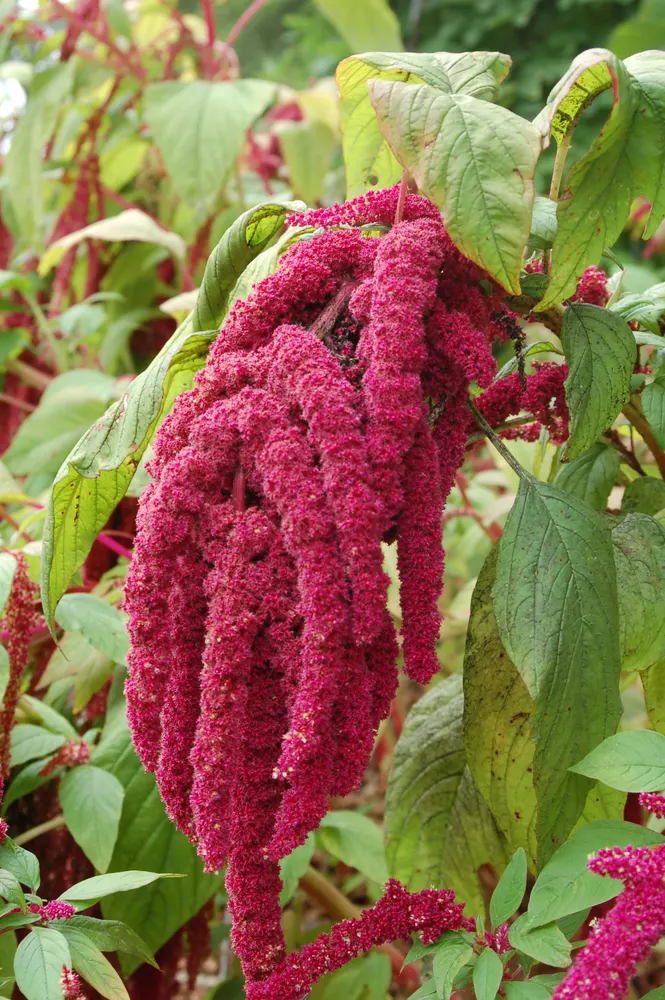
Photo: Tubifex, CC BY-SA 3.0 (via Wikimedia Commons)
Love-lies-bleeding
Amaranthus caudatus
Also known as Love-lies-bleeding, Tassel flower, Foxtail amaranth, Kiwicha, Quilete
Key benefits
✦Traditional uses
✦Amaranthus caudatus, better known as love-lies-bleeding, was cultivated by the Inca and other Andean peoples who treasured its tiny, protein-dense seeds as a staple grain alongside quinoa, grinding them into flour or popping them much like corn. Its dramatic, rope-like crimson tassels made it just as prized as a dye source and dooryard ornamental, grown for beauty as much as for the table. In folk tradition, the tender young leaves were cooked as a hearty potherb, and a mild infusion of the leaf was traditionally sipped to settle an unsettled stomach. The seeds, called kiwicha in the Andes, are still parched and eaten as a nourishing grain across South America and parts of India today.
How to grow & use it
✦The full apothecary for Love-lies-bleeding
Traditional remedies and step-by-step preparations, a complete growing guide, and how to harvest, dry, and store it, all unlocked with HerbLens Unlimited.
- ✦Remedies & preparations
- ✦ Growing guide
- ✦Harvest & storage
From under $6 a month. Free plant identifications always included.
- ✦Mint
- ✦Chamomile
- ✦Ginger
- ✦Spinach or lamb's quarters (for the cooked greens)
- ✦Quinoa (for the grain)
“For a garden dripping in crimson tassels, and a grain that has quietly fed mountain villages for a thousand years.”
The trailing crimson flower tassels, which can droop more than two feet long, gave the plant its wistful common name, and Victorian gardeners planted love-lies-bleeding in memorial gardens as a symbol of a love that outlasts loss.
Amaranth leaves and grain are safe to eat, though like spinach they contain oxalates, so it's best to cook mature leaves rather than eat large amounts raw.