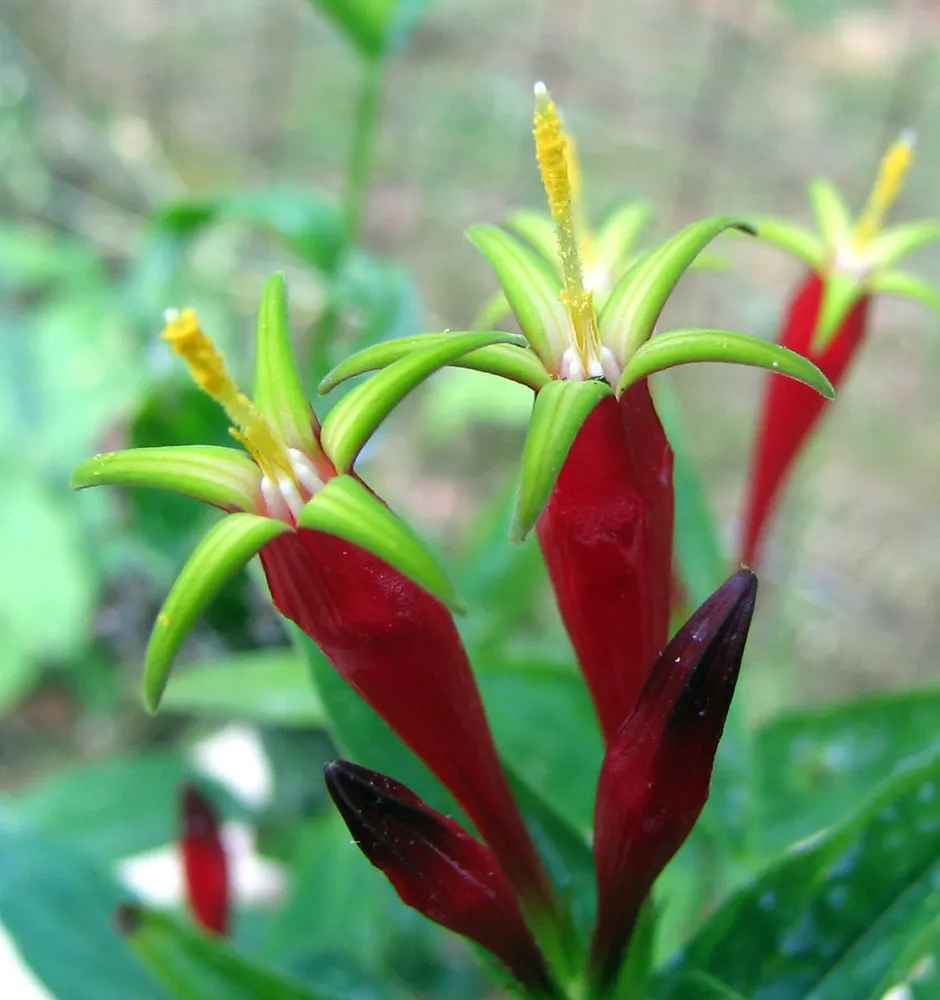
Photo: CC BY-SA 3.0 (via Wikimedia Commons)
Indian Pink
Spigelia marilandica
Also known as Pinkroot, Wormgrass, Maryland Pinkroot, Carolina Pink, Indian Pinkroot
Key benefits
✦Traditional uses
✦Indian Pink's root was one of the best known vermifuges of early American herbal medicine, used by the Cherokee and other southeastern nations, and later Colonial and Eclectic physicians, to expel intestinal worms. It was gathered and sold commercially as pinkroot throughout the 1800s, often mixed with a gentle purgative like senna to help carry the worms out of the body once loosened. Physicians of the era wrote just as often about its dangers as its usefulness, since the dose that expelled parasites sat uncomfortably close to the dose that made a person seriously ill. That narrow margin, more than anything else, is why pinkroot faded from use as gentler, safer alternatives became available, and why it survives today mostly as a treasured ornamental rather than a medicine chest staple.
How to grow & use it
✦The full apothecary for Indian Pink
Traditional remedies and step-by-step preparations, a complete growing guide, and how to harvest, dry, and store it, all unlocked with HerbLens Unlimited.
- ✦Remedies & preparations
- ✦ Growing guide
- ✦Harvest & storage
From under $6 a month. Free plant identifications always included.
- ✦Senna
- ✦Wild Ginger
- ✦Foamflower
- ✦Black Walnut hull
- ✦Wormwood
“For the woodland shade garden and the hummingbirds it calls in, not for the medicine cabinet.”
The word pink in Pinkroot has nothing to do with color. It comes from an old sense of pink meaning pierced or notched, the same root that gives us pinking shears, and it refers to the flower's small, star-shaped yellow petal tips that look almost cut with scissors.
Spigelia marilandica is toxic and should not be ingested or self-prepared. Its root contains pyridine alkaloids that, in the doses historically used as a vermifuge, frequently caused overdose symptoms including rapid or irregular heartbeat, dizziness, blurred or double vision, muscle twitching, convulsions, and in severe cases death. Nineteenth century physicians themselves warned that the effective and toxic doses were dangerously close together, and adulteration of commercial pinkroot with other plants made dosing even less predictable. It is not safe for pregnant or breastfeeding women, children, or pets, and has no place in home herbal preparation today. Grow and enjoy it as the striking native ornamental it is, and leave any internal use to history. Please consult a qualified healthcare professional or toxicologist with any questions about this plant.