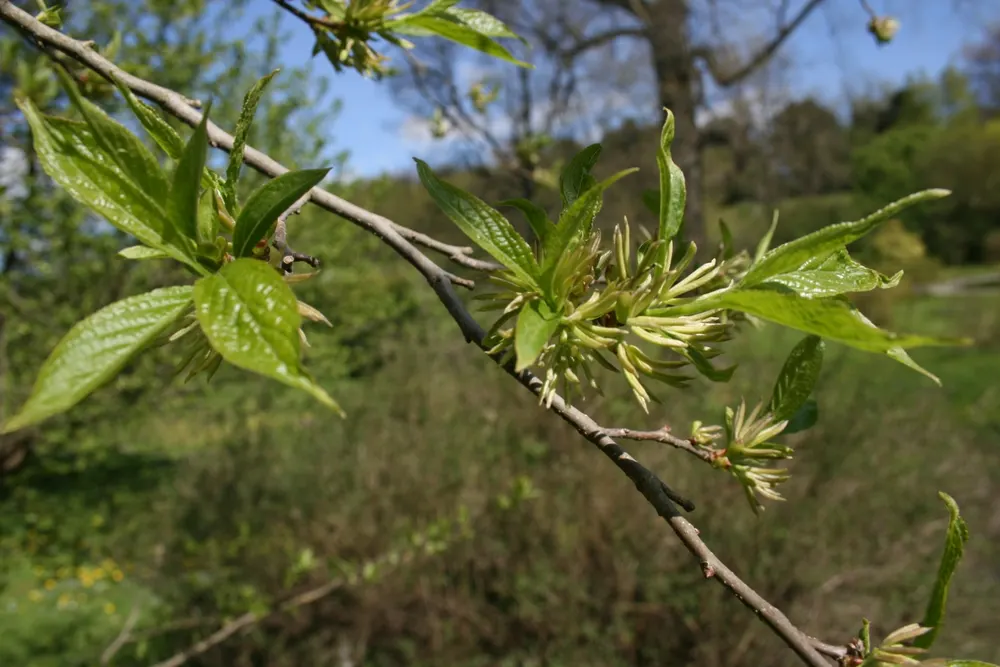
Photo: Sten Porse, CC BY-SA 3.0 (via Wikimedia Commons)
Hardy Rubber Tree
Eucommia ulmoides
Also known as Du Zhong, Eucommia Bark, Gutta-Percha Tree, Chinese Rubber Tree, Silk Elm
Key benefits
✦Traditional uses
✦Eucommia has been a cornerstone of Chinese herbalism for close to two thousand years, prized above nearly every other bark for what practitioners called its ability to nourish the kidneys and liver and to strengthen the sinews and bones. It was traditionally reached for by the aging, the weary, and the achy, especially for a sore or weak lower back and stiff knees that come with a long life of hard work. Emperors and commoners alike drank Du Zhong tea as a daily fortifying brew, not as a medicine for the sick but as a quiet ally for staying strong. It also holds a long history of traditional use in supporting pregnancy and easing a tired, heavy body.
How to grow & use it
✦The full apothecary for Hardy Rubber Tree
Traditional remedies and step-by-step preparations, a complete growing guide, and how to harvest, dry, and store it, all unlocked with HerbLens Unlimited.
- ✦Remedies & preparations
- ✦ Growing guide
- ✦Harvest & storage
From under $6 a month. Free plant identifications always included.
- ✦Goji berry
- ✦Astragalus
- ✦Cinnamon bark
- ✦Cistanche
- ✦Rehmannia
“For the quiet strength of an old tree, steeped slow and taken daily.”
Snap a fresh Eucommia leaf or piece of bark in two and pull it apart slowly. Thin, elastic threads of natural latex stretch between the pieces like tiny rubber bands, a trait unique enough among trees that it gave the species both its common name and its old use as a wartime source of rubber in China.
Eucommia bark tea is mild and well tolerated in normal amounts, but it has traditionally been used to support healthy blood pressure, so take care combining it with blood pressure medication. It has also traditionally been used to support pregnancy, so pregnant or nursing women shouldn't self-prescribe it and should check with a provider first.