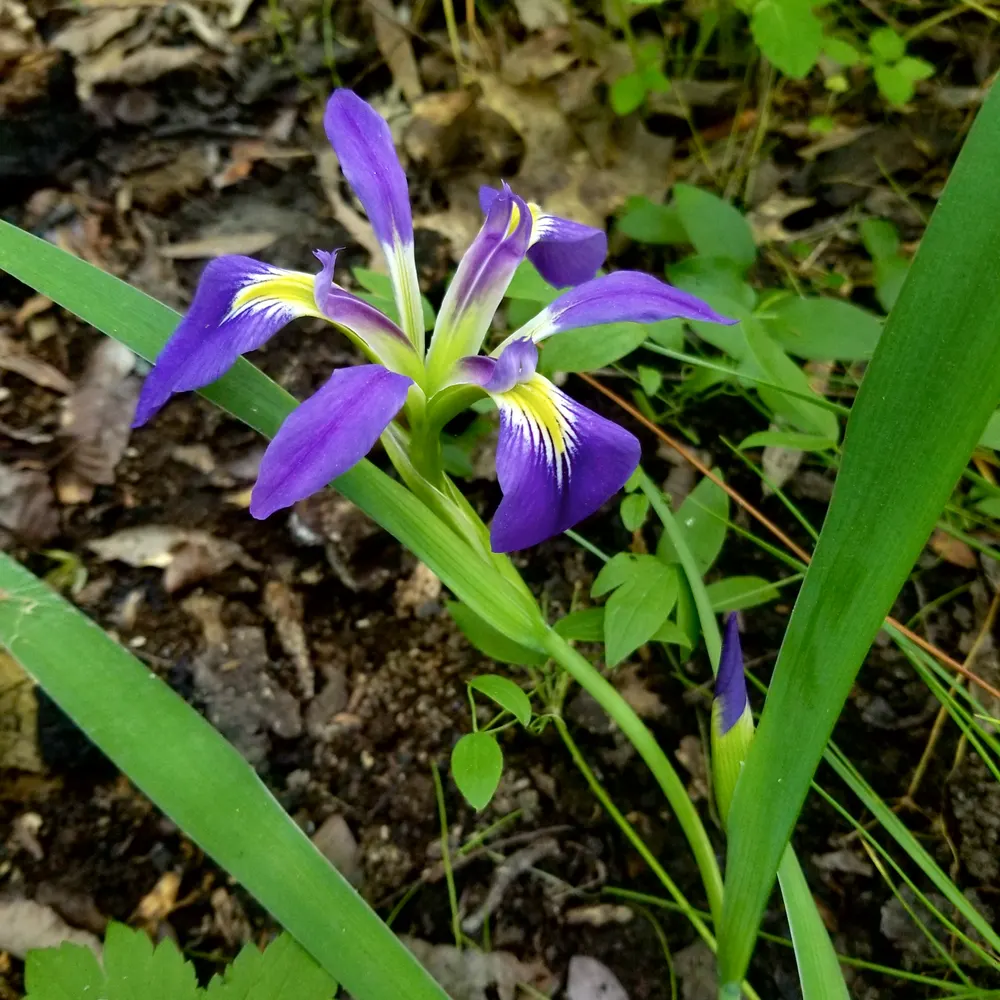
Photo: Eric Hunt, CC BY-SA 4.0 (via Wikimedia Commons)
Zigzag Iris
Iris brevicaulis
Also known as Lamance Iris, Zigzag Iris, Short-stemmed Iris
Key benefits
✦Traditional uses
✦Zigzag iris is one of the five wild Louisiana iris species, growing along the bayous, sloughs, and swamp margins of the Mississippi Delta, where its violet blue flowers have long marked the edge between dry ground and water. Nineteenth and twentieth century plant collectors prized it and its Louisiana iris cousins for hybridizing, and it helped give rise to the many garden iris cultivars grown today. Unlike some of its iris relatives, it does not carry a meaningful history of internal folk medicine use, since the rhizome that other cultures sometimes reached for in small, cautious doses is now understood to be irritating and unsafe. Its real inheritance is a horticultural one, prized for turning boggy, hard to plant corners of the yard into a season of color.
How to grow & use it
✦The full apothecary for Zigzag Iris
Traditional remedies and step-by-step preparations, a complete growing guide, and how to harvest, dry, and store it, all unlocked with HerbLens Unlimited.
- ✦Remedies & preparations
- ✦ Growing guide
- ✦Harvest & storage
From under $6 a month. Free plant identifications always included.
- ✦Cardinal flower
- ✦Swamp milkweed
- ✦Louisiana iris cultivars
- ✦Iris versicolor (blue flag iris)
- ✦Iris fulva (copper iris)
“For the boggy, forgotten corner of the garden that nothing else will brighten.”
Zigzag iris gets its common name from the way its flowering stem bends sharply at each joint after a bloom fades, giving the whole stalk a lightning bolt shape by the end of the season.
Every part of Iris brevicaulis, especially the thick underground rhizome, contains irisin and related resinous glycosides that are toxic if eaten, and can bring on nausea, vomiting, drooling, and diarrhea in people, dogs, cats, and livestock. The clear sap can also irritate skin and eyes on contact, so gloves are worth wearing when dividing or transplanting the rhizomes. This is not a plant with a safe tradition of internal use, and it should be treated strictly as an ornamental for the garden pond edge, never as a tea, tincture, or food. Keep rhizomes and cut foliage well away from small children, curious pets, and grazing animals, and speak with a doctor, poison control, or veterinarian right away if ingestion is suspected.