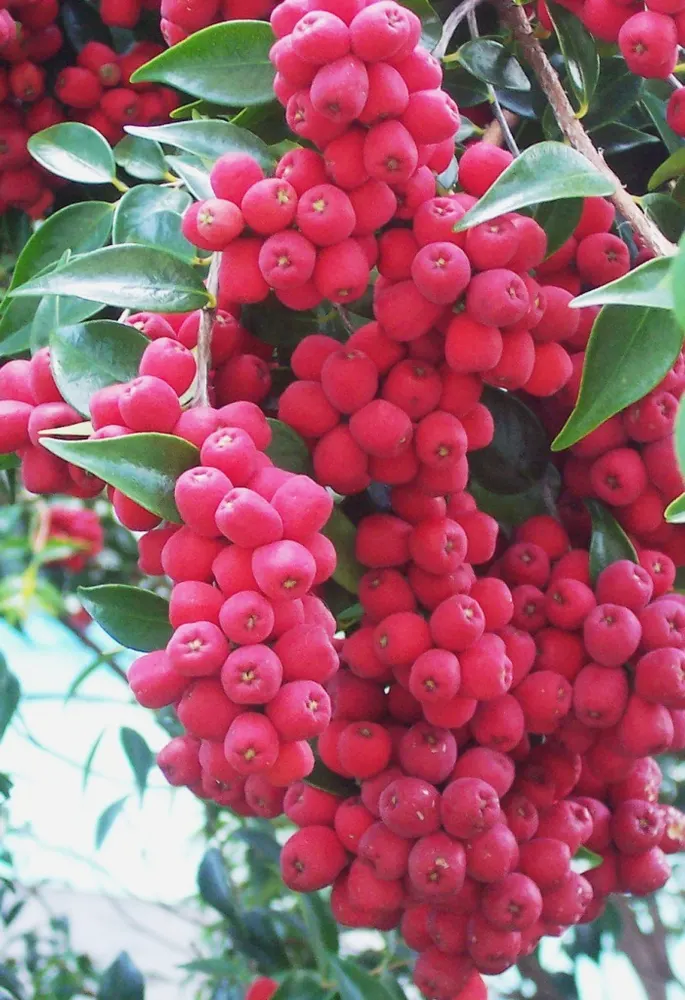
Photo: Poyt448 Peter Woodard, Public domain (via Wikimedia Commons)
Riberry
Syzygium luehmannii
Also known as Small-leaved Lilly Pilly, Cherry Satinash, Cherry Alder
Key benefits
✦Traditional uses
✦Long before riberry showed up in city cafes, it was a familiar sight to Aboriginal peoples along Australia's eastern coast, who gathered the small crimson berries straight from the branch as a sweet, peppery trailside snack. The fruit's quick spoilage meant it was mostly eaten fresh and in season, shared communally as the trees came into bearing each summer. In recent decades riberry has become one of the most recognized bush tucker fruits, prized by Australian cooks for a flavor often compared to a cross between a tart apple and ground cloves. It carries that same story into modern kitchens, where it turns up in jams, sauces, and baked goods as a distinctly Australian ingredient.
How to grow & use it
✦The full apothecary for Riberry
Traditional remedies and step-by-step preparations, a complete growing guide, and how to harvest, dry, and store it, all unlocked with HerbLens Unlimited.
- ✦Remedies & preparations
- ✦ Growing guide
- ✦Harvest & storage
From under $6 a month. Free plant identifications always included.
- ✦Lemon myrtle
- ✦Cinnamon myrtle
- ✦Macadamia
- ✦Fresh cranberries
- ✦Tart cherries
“For a spicy, tart burst of Australian rainforest tucked into a summer jam.”
Riberry trees flush their new growth in a vivid coppery pink before it matures to green, so the tree puts on a colorful show twice, once with new leaves and once with fruit.
Riberry is a well-established bush food with no record of toxicity when the ripe fruit is eaten normally, though anyone with a myrtle-family allergy should try a small amount first. The fruit is watery and spoils fast, so eat it fresh or refrigerate briefly.