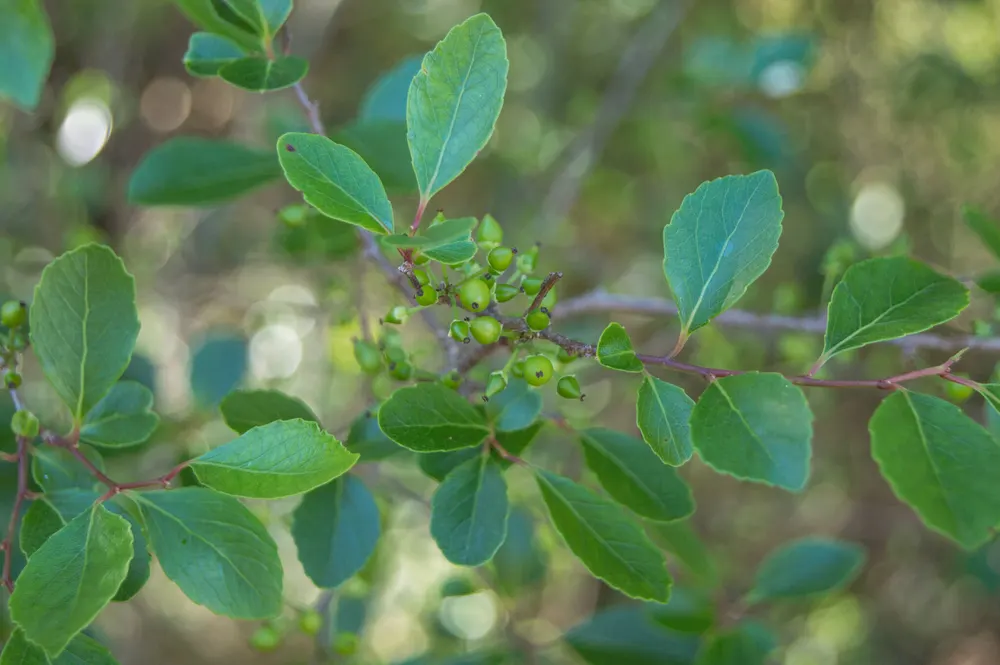
Photo: Facundo Chieffo, CC BY 4.0 (via Wikimedia Commons)
Salzmann's Xylosma
Xylosma salzmannii
Also known as Salzmann's xylosma, Brazilian xylosma
Key benefits
✦Traditional uses
✦Xylosma salzmannii is one of the quieter residents of Brazil's Atlantic Forest, a spiny-branched shrub or small tree named for Philipp Salzmann, a botanist-collector who gathered plants along the Bahia coast in the early 1800s. Unlike many of its herbal cousins, this xylosma has left little trace in the recorded folk pharmacy, known mostly through herbarium sheets and forest surveys rather than kitchen remedies. Other members of the wider Xylosma genus have long been valued for tough, close-grained wood and for their usefulness as thorny, living hedges around homesteads, and salzmannii carries that same wiry, protective character. For now, its clearest traditional value seems to be ecological rather than medicinal, offering shelter, flowers, and small fruit to the birds and insects that share its patch of forest.
How to grow & use it
✦The full apothecary for Salzmann's Xylosma
Traditional remedies and step-by-step preparations, a complete growing guide, and how to harvest, dry, and store it, all unlocked with HerbLens Unlimited.
- ✦Remedies & preparations
- ✦ Growing guide
- ✦Harvest & storage
From under $6 a month. Free plant identifications always included.
- ✦Native Atlantic Forest understory companions such as Psychotria and Miconia species, for a naturalistic planting
- ✦Other spiny hedge shrubs, when grown for boundary or privacy screening
- ✦Xylosma congesta (shiny xylosma), a related species more widely available in cultivation for similar hedge use
“For the quiet, thorn-guarded corners of the forest edge, where a plant needs no fanfare to hold its ground.”
The genus name Xylosma comes from the Greek 'xylon' (wood) and 'osme' (fragrance or smell), a nod to the notably scented wood found in several species across this thorny genus.
Xylosma salzmannii has no established history of food or medicinal use, and its bark, leaves, and fruit should not be ingested without confident identification, since related species can irritate skin or the digestive tract.