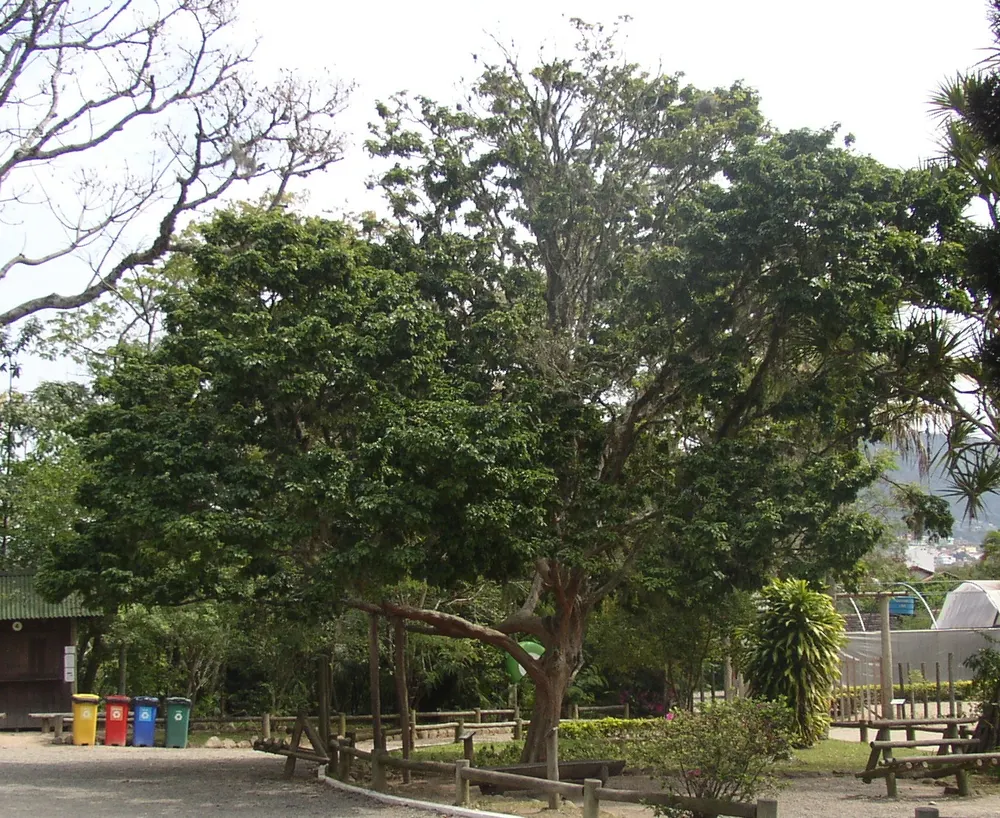
Photo: Der Kolonist, CC BY 2.5 (via Wikimedia Commons)
Brazilwood
Caesalpinia echinata
Also known as Pau-Brasil, Pernambuco wood, Ibirapitanga
Key benefits
✦Traditional uses
✦Long before it lent its name to a nation, this tree's blood-red heartwood was already treasured along Brazil's coast, where it yielded a deep crimson dye used for cloth, ink, and ceremony. European traders arrived to find forests thick with it, and within decades the wood, called pau-brasil, became one of the earliest and most valuable exports of the New World, so central to the colony's economy that the land itself came to be called Brazil. Alongside the dye trade, communities along the coast turned to a decoction of the tannin-rich bark as a folk remedy, dabbed on minor wounds and irritated skin or used as a gargle for a sore throat. Today the same dense, resonant wood, aged and cut fine, is what master luthiers reach for to craft the finest violin and cello bows.
How to grow & use it
✦The full apothecary for Brazilwood
Traditional remedies and step-by-step preparations, a complete growing guide, and how to harvest, dry, and store it, all unlocked with HerbLens Unlimited.
- ✦Remedies & preparations
- ✦ Growing guide
- ✦Harvest & storage
From under $6 a month. Free plant identifications always included.
- ✦Witch hazel
- ✦Yarrow
- ✦Oak bark
- ✦Logwood (Haematoxylum campechianum)
- ✦Madder root
“For the story of the tree that colored royal cloth ember-red, and gave an entire nation its name.”
Brazil is named after this tree, not the other way around. Portuguese traders found the coast thick with its ember-red wood, called it pau-brasil after brasa, the Portuguese word for glowing coal, and the colony that grew up around that trade eventually took the same name.
Brazilwood itself isn't known to be toxic, but the tree is heavily thorned, so wear gloves when handling bark or wood. More importantly, wild Brazilwood is endangered and protected under CITES, so only use cultivated or certified stock, never wild-harvested material.