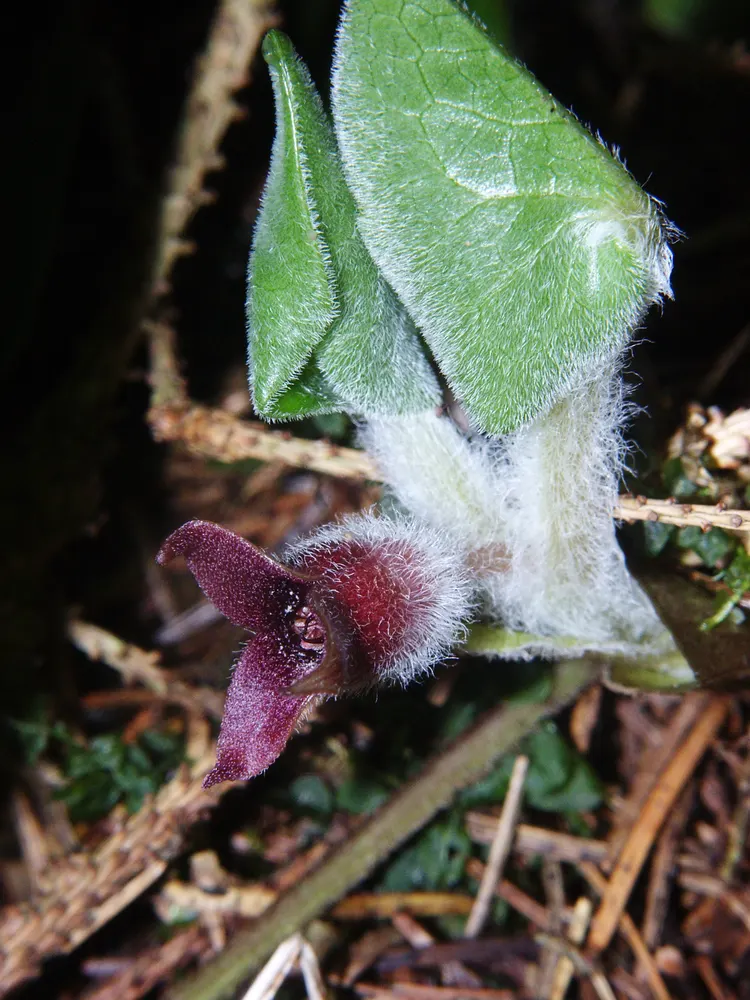
Photo: Bernd Haynold, CC BY 2.5 (via Wikimedia Commons)
European Wild Ginger
Asarum europaeum
Also known as Asarabacca, Hazelwort, European Wild Ginger, Wild Nard
Key benefits
✦Traditional uses
✦In old European herbals, the pungent, ginger-scented root of Asarum europaeum was dried and ground into a coarse snuff, taken to provoke sneezing that was thought to clear the head of catarrh and stubborn headache. Physicians of the sixteenth and seventeenth centuries also reached for it as a strong emetic and purgative, and country healers rubbed the crushed leaves into veterinary drenches for ailing cattle. Its warm, ginger-like fragrance even led some cooks to use it as a poor man's substitute for true ginger, despite the two plants being unrelated. Modern research has since shown the plant contains aristolochic acids, and those old folk uses have been quietly retired by responsible herbalists, leaving Asarum europaeum as a plant more suited to the shade garden than the medicine cabinet.
How to grow & use it
✦The full apothecary for European Wild Ginger
Traditional remedies and step-by-step preparations, a complete growing guide, and how to harvest, dry, and store it, all unlocked with HerbLens Unlimited.
- ✦Remedies & preparations
- ✦ Growing guide
- ✦Harvest & storage
From under $6 a month. Free plant identifications always included.
- ✦Hellebores
- ✦Woodland ferns
- ✦Hostas
- ✦True ginger, Zingiber officinale, for culinary warmth and spice
- ✦Ground ivy, Glechoma hederacea, as a gentler traditional European woodland herb
“A quiet, glossy carpet for the shadiest corner of an old-world garden, not a plant for the apothecary shelf.”
Each seed of Asarum europaeum carries a fatty, sausage-shaped appendage called an elaiosome. Woodland ants haul the seeds back to their nests to feast on this fatty treat, then discard the seed itself unharmed, unwittingly planting the next generation of wild ginger across the forest floor.
European wild ginger contains aristolochic acids, confirmed human carcinogens and kidney toxins linked to irreversible kidney damage and urinary tract cancer at any dose. No part of this plant should ever be taken internally or used medicinally; treat it strictly as an ornamental garden plant.