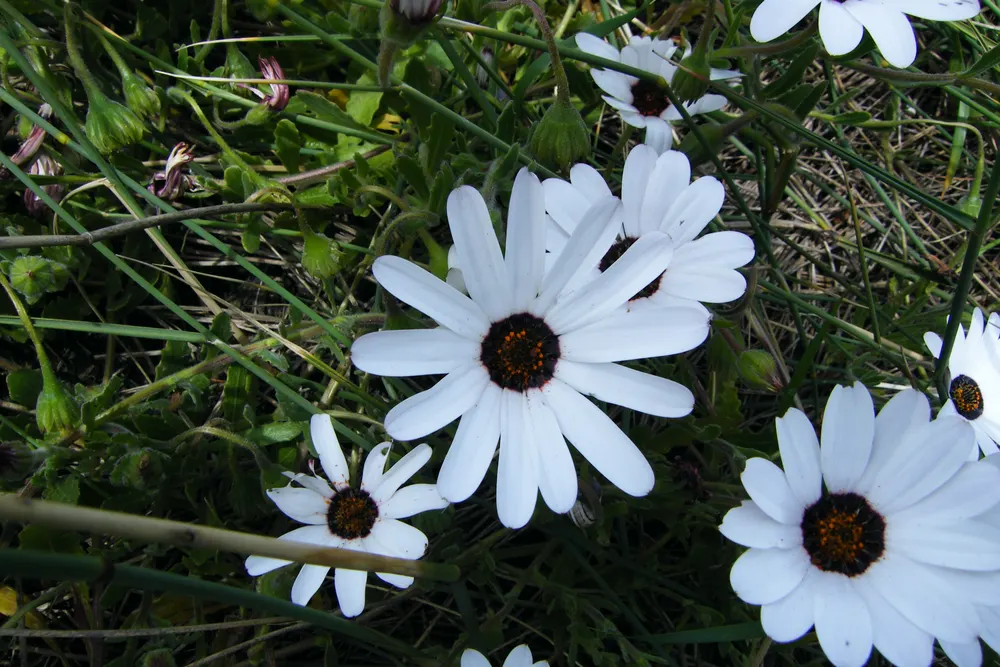
Photo: Andrew massyn, Public domain (via Wikimedia Commons)
Cape Marigold
Dimorphotheca pluvialis
Also known as Rain Daisy, Weather Prophet, Cape Rain Daisy, White Namaqualand Daisy
Key benefits
✦Traditional uses
✦Cape marigold grows wild across the sandy flats of South Africa's Western Cape, where its papery white and violet-eyed daisies carpet the ground each spring after the winter rains. Dutch and British settlers carried its seed home in the eighteenth century for its cheerful, undemanding beauty, and it soon became a cottage-garden staple across Europe and later California, where it slipped the garden fence and now blooms wild along coastal dunes. Its country name, weather prophet, comes from the old habit gardeners noticed of the flowers folding shut ahead of clouds or rain and reopening the moment the sun returned, making it as much a piece of everyday weather lore as a garden flower. Unlike many of its Asteraceae cousins, it was never widely taken up as a medicinal or kitchen herb, and its story remains one of ornament rather than remedy.
How to grow & use it
✦The full apothecary for Cape Marigold
Traditional remedies and step-by-step preparations, a complete growing guide, and how to harvest, dry, and store it, all unlocked with HerbLens Unlimited.
- ✦Remedies & preparations
- ✦ Growing guide
- ✦Harvest & storage
From under $6 a month. Free plant identifications always included.
- ✦Osteospermum (African daisy)
- ✦Gazania
- ✦Sweet alyssum
- ✦Osteospermum (African daisy)
- ✦Calendula, for a similarly cheerful daisy-form bloom
“For the patch of poor, sandy soil where nothing else wants to bloom, and for mornings that deserve a field of daisies turned toward the sun.”
Cape marigold flowers track the weather almost like a living barometer, closing their petals tight on overcast days and at night, then unfurling again only once the sun breaks through, a trick of light-sensitive movement called nyctinasty that earned the plant its old nickname, the weather prophet.
Dimorphotheca pluvialis is grown as a garden ornamental, not as a culinary or medicinal herb, and there is no reliable traditional record of it being eaten or brewed as a remedy. Like many members of the daisy family (Asteraceae), its foliage and sap can cause skin irritation or an allergic reaction in people who are sensitive to ragweed, chrysanthemums, or related plants, and its edibility has not been established. Keep it out of the kitchen and away from the mouths of children and pets, and treat any dried material as a decorative item only. As always, speak with a qualified herbalist, doctor, or poison control resource before using any plant medicinally or if accidental ingestion occurs.