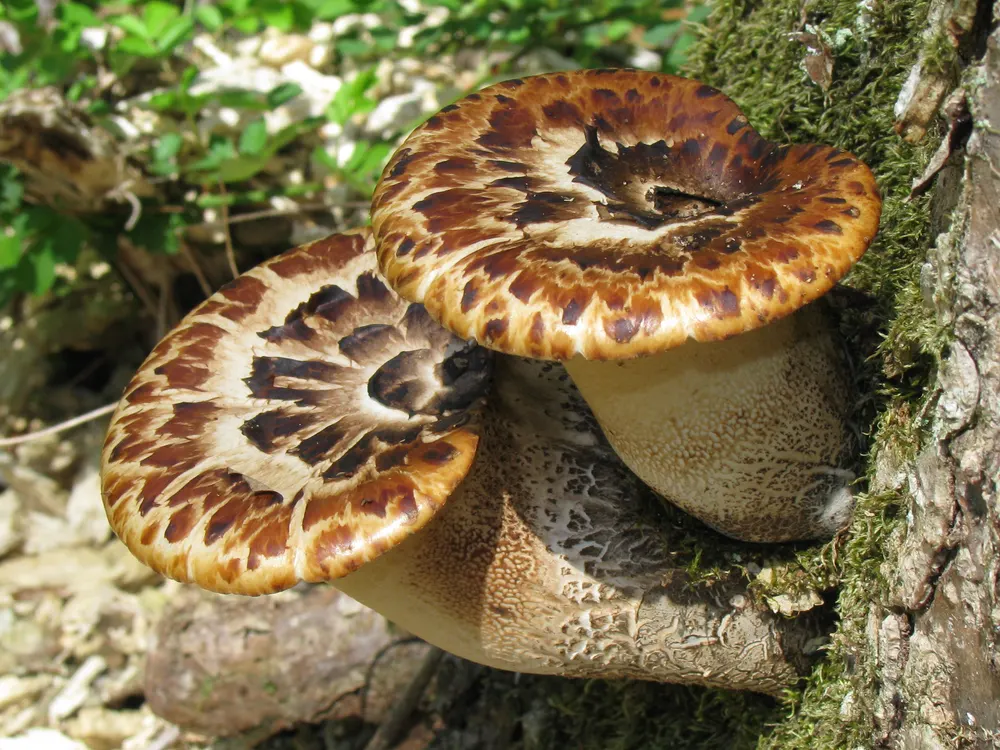
Photo: Dan Molter, CC BY-SA 3.0 (via Wikimedia Commons)
Dryad's Saddle
Polyporus squamosus
Also known as Pheasant Back Mushroom, Scaly Polypore, Hawk's Wing
Key benefits
✦Traditional uses
✦Dryad's Saddle earned its old-world name from a bit of folklore imagination, its broad, saddle-shaped brackets looking fit for a woodland spirit to rest upon. For generations of foragers across Europe and North America, it has been valued chiefly as a springtime table mushroom, gathered while still young and tender, when the cap gives easily and carries a faint, unmistakable scent of fresh watermelon rind or cucumber. Older, tougher brackets were traditionally left on the tree, though some foragers dried them for use in flavoring broths or, when truly past eating, repurposed the leathery flesh as tinder or rough cordage in a pinch. Its story is really one of the forest kitchen and the woodpile rather than the medicine cabinet.
How to grow & use it
✦The full apothecary for Dryad's Saddle
Traditional remedies and step-by-step preparations, a complete growing guide, and how to harvest, dry, and store it, all unlocked with HerbLens Unlimited.
- ✦Remedies & preparations
- ✦ Growing guide
- ✦Harvest & storage
From under $6 a month. Free plant identifications always included.
- ✦Thyme
- ✦Garlic
- ✦Parsley
- ✦Chicken of the Woods
- ✦Oyster Mushroom
“For the forager who wants spring's first woodland find, caught tender before the wood claims it back.”
A freshly cut Dryad's Saddle often smells strikingly like watermelon rind or fresh cucumber, a scent so recognizable that many foragers say they can identify it with their eyes closed before ever seeing the mushroom.
Dryad's saddle is good to eat only while young, since mature brackets turn tough and can cause mild digestive upset. As with any wild mushroom, confirm identification with an experienced forager before eating it.