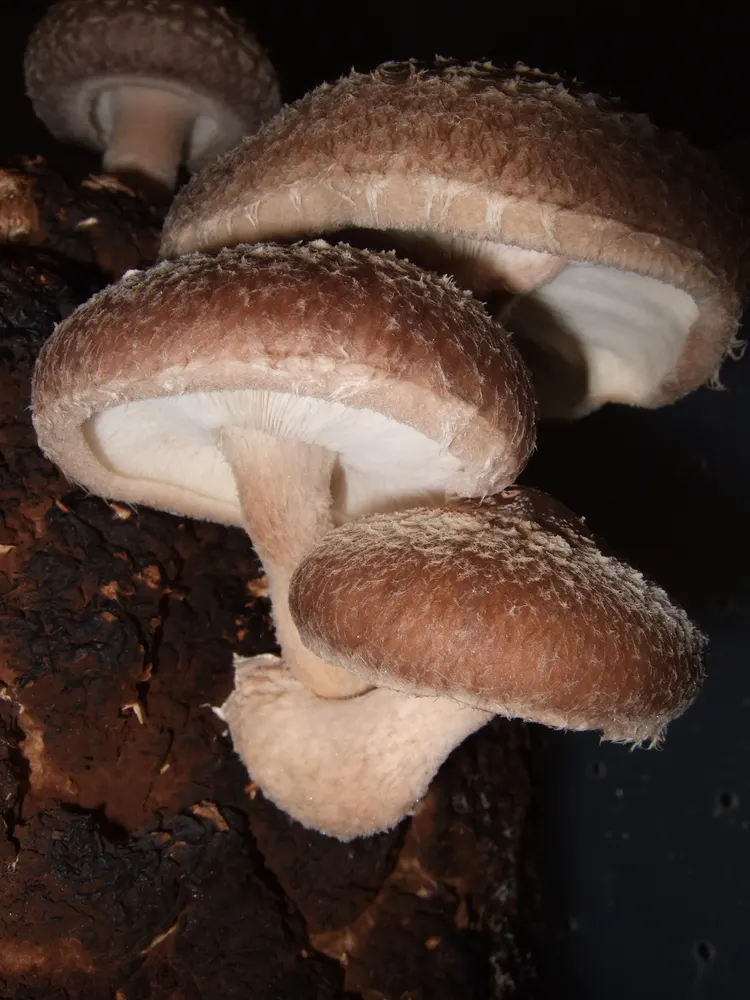
Photo: frankenstoen from Portland, Oregon, CC BY 2.0 (via Wikimedia Commons)
Shiitake Mushroom
Lentinula edodes
Also known as Shiitake, Black Forest Mushroom, Golden Oak Mushroom, Xiānggū (Fragrant Mushroom), Donko
Key benefits
✦Traditional uses
✦Shiitake has been cultivated in China and Japan for well over a thousand years, prized in traditional Chinese medicine as a food that builds qi and supports the body's resilience. Japanese herbalists and cooks have long called it a mushroom of longevity, worked into broths meant to fortify the elderly and the convalescent. Long before laboratories took an interest in its compounds, shiitake earned its place at the table simply because it made humble broths taste like something worth savoring. Today it remains one of the most widely cultivated mushrooms in the world, equally at home in a folk remedy and a fine kitchen.
How to grow & use it
✦The full apothecary for Shiitake Mushroom
Traditional remedies and step-by-step preparations, a complete growing guide, and how to harvest, dry, and store it, all unlocked with HerbLens Unlimited.
- ✦Remedies & preparations
- ✦ Growing guide
- ✦Harvest & storage
From under $6 a month. Free plant identifications always included.
- ✦Astragalus root
- ✦Ginger
- ✦Kombu (kelp)
- ✦Maitake mushroom
- ✦Oyster mushroom
“For the deep, woodsy savor that turns a plain broth into something that feels like it is looking after you.”
Fresh shiitake caps left gill-side up in strong sunlight for even an hour or two before drying can develop significantly more vitamin D, a trick foragers and cooks have used long before anyone understood the chemistry behind it.
Always cook shiitake thoroughly; eaten raw or undercooked, it can trigger an itchy, whip-like rash called shiitake dermatitis. Concentrated extracts may affect blood clotting and immune activity, so use caution with blood-thinning or immune-modulating medication.