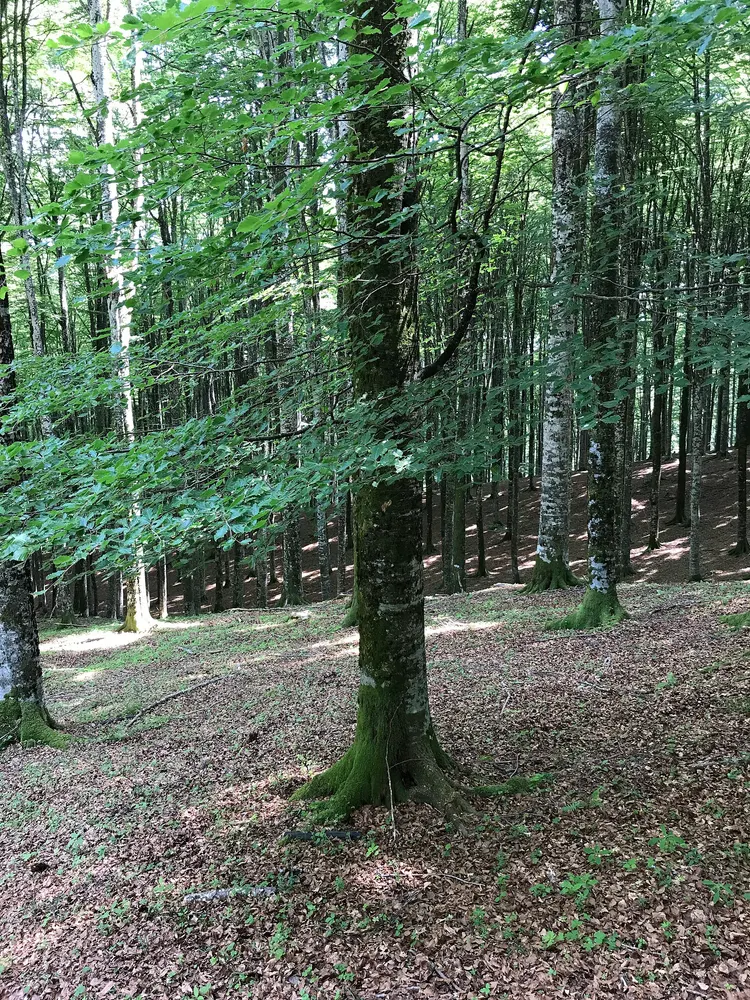
Photo: GooseCanada, CC BY-SA 4.0 (via Wikimedia Commons)
European Beech
Fagus sylvatica
Also known as Common Beech, Beechwood, Copper Beech (purple-leaved cultivars)
Key benefits
✦Traditional uses
✦Long before it was prized for its pale, fine-grained timber, the beech fed and sheltered the villages that lived beneath it. Its young spring leaves were tossed into salads or steeped as a gentle tea, and in parts of Germany they were even dried and used to stuff pillows and mattresses, valued for their pleasant scent and their reputation for resisting mites. Its nuts, roasted to mellow their sharpness, were a reliable autumn food across the European countryside, and its bark was simmered into folk remedies for coughs and fevers. Foresters still speak of the beech's quiet, cathedral-like presence, a tree that shapes the whole character of the wood it grows in.
How to grow & use it
✦The full apothecary for European Beech
Traditional remedies and step-by-step preparations, a complete growing guide, and how to harvest, dry, and store it, all unlocked with HerbLens Unlimited.
- ✦Remedies & preparations
- ✦ Growing guide
- ✦Harvest & storage
From under $6 a month. Free plant identifications always included.
- ✦Elderflower
- ✦Linden (lime blossom)
- ✦Mint
- ✦Oak leaf (for tannin-rich preparations)
- ✦Hazel leaf
“When you want the quiet, cathedral hush of an old beech wood, and a taste of the forest floor in autumn.”
Beech trees do not produce a heavy nut crop every year. Every five to ten years they have what foresters call a mast year, dropping far more nuts than usual, and for centuries European swineherds timed the practice of pannage, driving their pigs into the beech woods each autumn, around this unpredictable rhythm.
Raw beechnuts contain a mild toxin called fagin and can cause digestive upset or nausea if eaten raw in quantity, so they are traditionally roasted first. The pollen can also trigger seasonal allergies.