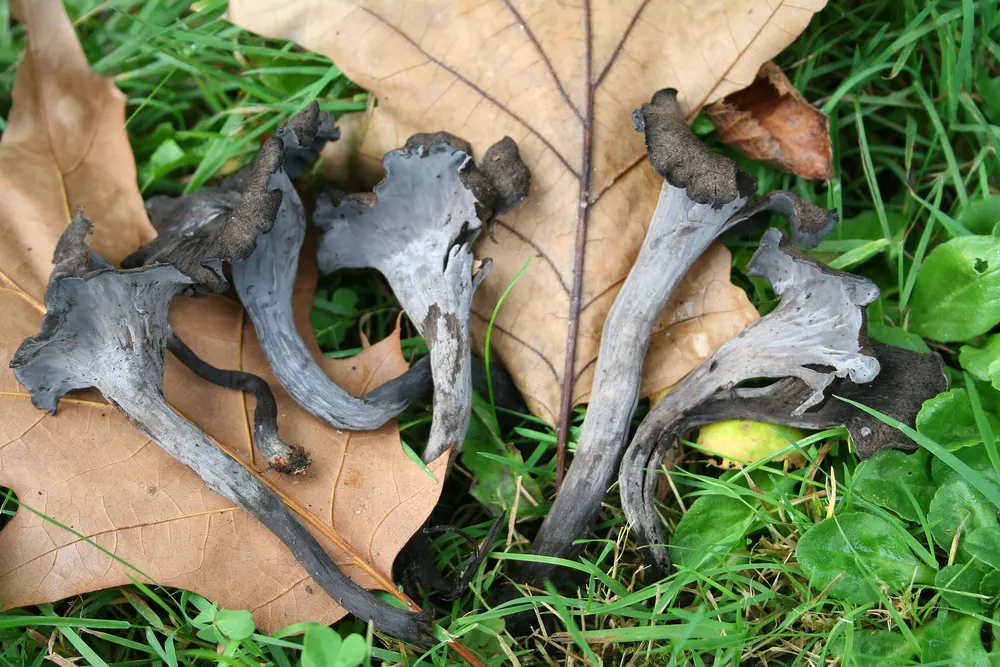
Photo: Jean-Pol GRANDMONT, CC BY 3.0 (via Wikimedia Commons)
Black Trumpet
Craterellus cornucopioides
Also known as Horn of Plenty, Trumpet of Death, Trompette de la Mort, Craterelle, Black Chanterelle
Key benefits
✦Traditional uses
✦In the oak and beech woods of the Dordogne, generations of French foragers have walked the same autumn paths their grandparents did, hunting for these dark little horns hiding in the leaf litter. Despite its funereal nickname, trompette de la mort, the black trumpet has never been feared, only cherished, dried by the basketful and tucked away to deepen soups, sauces, and stuffings all winter long. Because it forms a partnership with living tree roots underground, it has never been successfully farmed, so every trumpet on the table has been walked to and picked by hand, a tradition that has kept foraging knowledge passed carefully from one generation to the next. Its intense, almost truffle-like aroma when dried has made it a quietly treasured ingredient in rustic European kitchens for centuries.
How to grow & use it
✦The full apothecary for Black Trumpet
Traditional remedies and step-by-step preparations, a complete growing guide, and how to harvest, dry, and store it, all unlocked with HerbLens Unlimited.
- ✦Remedies & preparations
- ✦ Growing guide
- ✦Harvest & storage
From under $6 a month. Free plant identifications always included.
- ✦Thyme
- ✦Parsley
- ✦Bay leaf
- ✦Chanterelle
- ✦Dried porcini
In parts of France the black trumpet is called trompette de la mort, trumpet of the dead, simply because its dark, funnel shape suggested a horn left graveside, yet it is one of the most sought-after edible mushrooms in the region, a case of a spooky name attached to a much-loved delicacy.
As with any wild mushroom, correct identification is essential before eating one, since inexperienced foragers can confuse black trumpets with less desirable or harmful look-alikes; always forage with an experienced local guide or mycological society and never eat a wild mushroom you cannot confidently identify. Black trumpets should always be cooked thoroughly rather than eaten raw, and anyone with known mushroom sensitivities or allergies should avoid them. As with introducing any new wild food, those who are pregnant, nursing, managing a health condition, or unsure about foraging safety should talk with a qualified professional or experienced forager first.