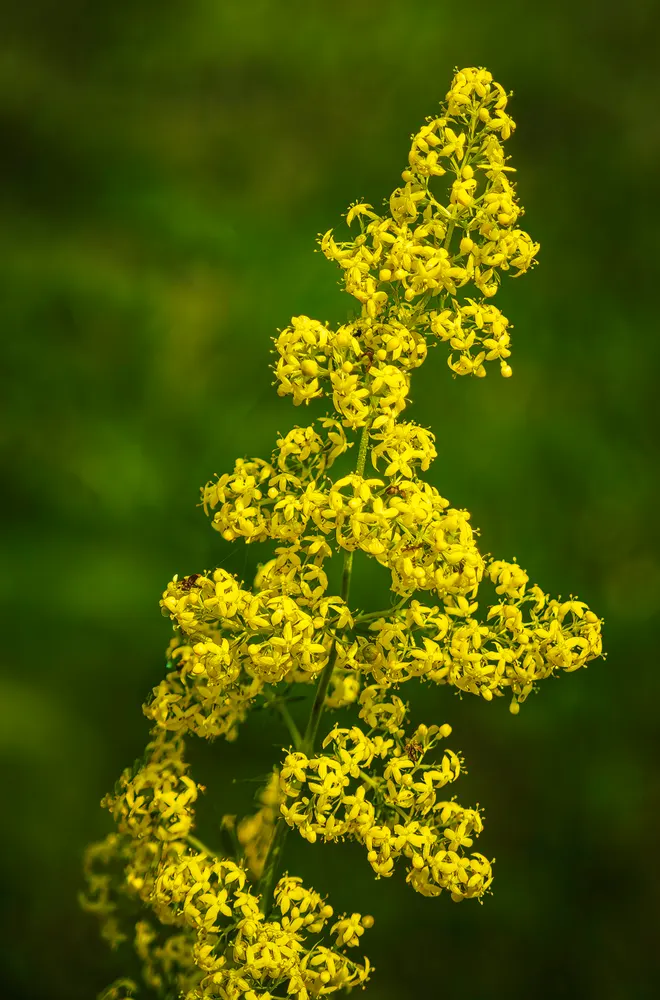
Photo: Didier Descouens, CC BY-SA 4.0 (via Wikimedia Commons)
Lady's Bedstraw
Galium verum
Also known as Yellow Bedstraw, Our Lady's Bedstraw, Cheese Rennet, Maid's Hair, Curdwort
Key benefits
✦Traditional uses
✦Lady's Bedstraw earned its common name from centuries of use as mattress stuffing. Its wiry stems dry soft and sweetly fragrant, and old folklore held that it once cushioned the manger at Bethlehem, which is why it carries the name Our Lady's Bedstraw. Country dairy workers relied on its flowering tops to curdle milk long before rennet tablets existed, using it to set cheese and, in some regions, to tint Double Gloucester a warm yellow. In traditional folk practice, an infusion of the flowering herb was also taken as a mild diuretic and dabbed on the skin to cool minor irritations and support wound healing.
How to grow & use it
✦The full apothecary for Lady's Bedstraw
Traditional remedies and step-by-step preparations, a complete growing guide, and how to harvest, dry, and store it, all unlocked with HerbLens Unlimited.
- ✦Remedies & preparations
- ✦ Growing guide
- ✦Harvest & storage
From under $6 a month. Free plant identifications always included.
- ✦Cleavers
- ✦Nettle
- ✦Calendula
- ✦Cleavers
- ✦Meadowsweet
“For a cottage-garden herb that turns sweet as new-mown hay when dried, humble as straw and gentle as an old cradle song.”
As Lady's Bedstraw dries, it releases coumarin, the same fragrant compound found in sweet vernal grass, which is why old mattresses stuffed with it were said to smell like fresh hay for years, and also why it was once tucked into linens to help keep fleas away.
Lady's bedstraw is fine in modest culinary or topical amounts, but it contains coumarins that in concentrated doses may affect blood clotting, so avoid it alongside blood thinners. It's best avoided during pregnancy and breastfeeding, and since several Galium species look alike, confirm identification carefully when foraging.