Photo: davecz2, CC BY-SA 4.0 (via Wikimedia Commons)
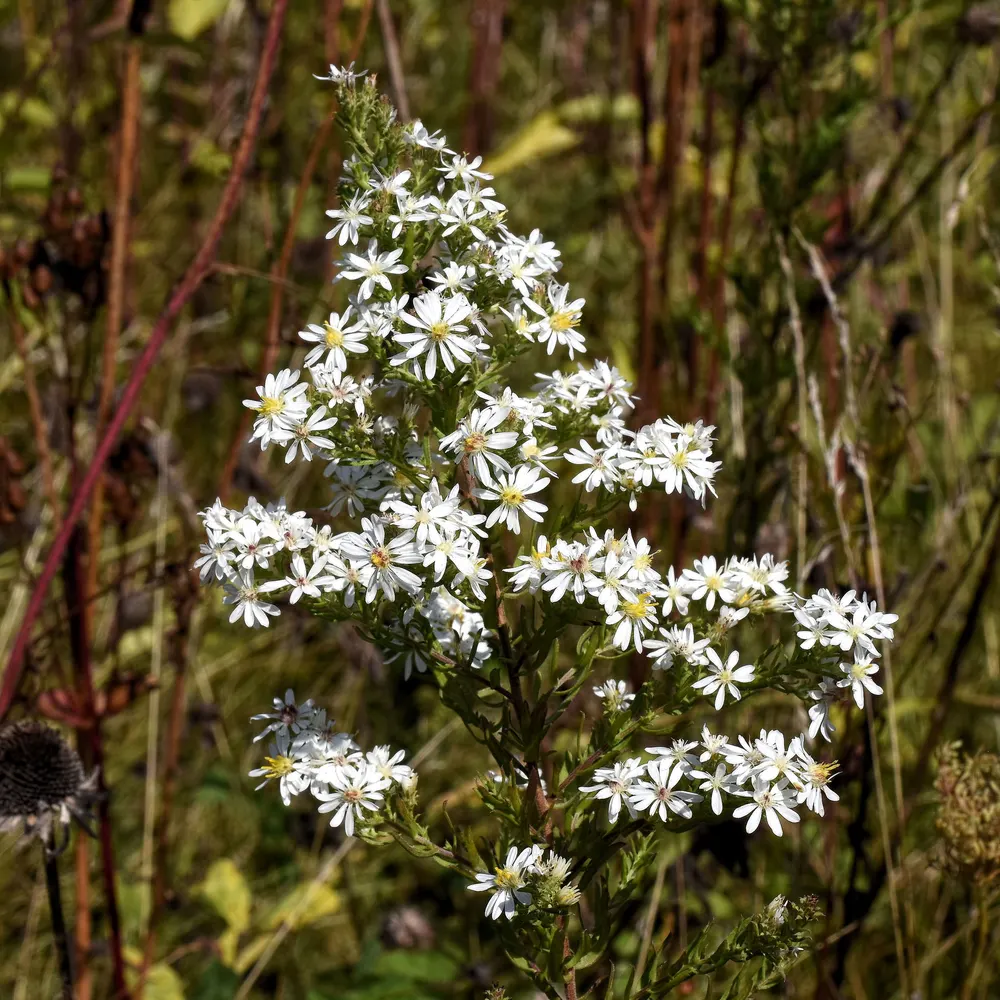
White Heath Aster
Symphyotrichum ericoides
Also known as Heath Aster, Frost Aster, Farewell-Summer
Key benefits
✦Traditional uses
✦White heath aster is not a well-documented medicinal herb the way its showier cousins are, and it never earned a settled place in the herbalist's cabinet. Its real legacy is older and quieter than medicine: it is one of the last wild things blooming before frost, a haze of small white stars along fence lines and prairie edges that once told travelers and farmers alike that summer's work was closing out. Some Native American communities incorporated asters like this one into everyday and ceremonial plant use, though the specifics were rarely recorded with the detail given to more prominent healing plants. Today it is valued far more as a backbone of native gardens and pollinator meadows than as anything to steep or swallow.
How to grow & use it
✦The full apothecary for White Heath Aster
Traditional remedies and step-by-step preparations, a complete growing guide, and how to harvest, dry, and store it, all unlocked with HerbLens Unlimited.
- ✦Remedies & preparations
- ✦ Growing guide
- ✦Harvest & storage
From under $6 a month. Free plant identifications always included.
- ✦Goldenrod
- ✦New England Aster
- ✦Joe Pye Weed
- ✦New England Aster (Symphyotrichum novae-angliae)
“For the last hush of the meadow before frost, when a thousand small white stars open along the roadside and the pollinators come one final time.”
The species name ericoides means resembling heath, a nod to how its small, needle-like leaves echo the look of European heather, even though the two plants are not related at all.
No significant toxicity is documented for white heath aster, but as a member of the daisy family its pollen and foliage may cause allergic reactions in people sensitive to ragweed or chrysanthemums.