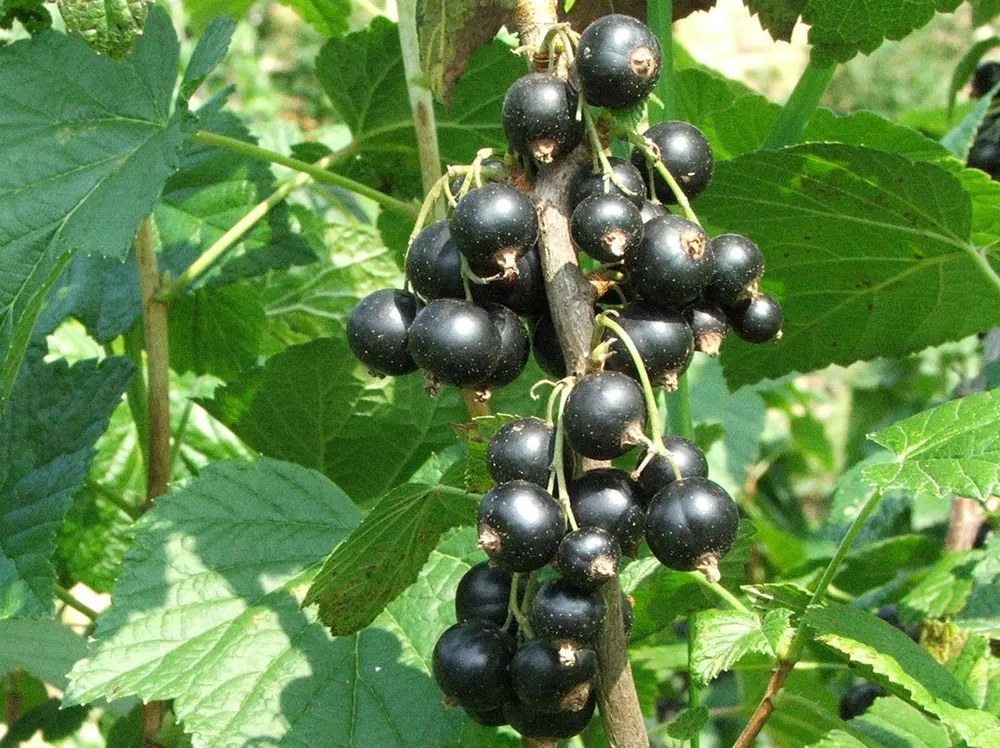
Photo: Jerzy Opioła, CC BY-SA 3.0 (via Wikimedia Commons)
Blackcurrant
Ribes nigrum
Also known as Black currant, European blackcurrant, Cassis, Quinsy berry
Key benefits
✦Traditional uses
✦Long before the citrus trade reached northern Europe, blackcurrant was one of the cold season's most trusted allies, its tart, jewel-dark berries prized as a home remedy for coughs, sore throats, and the first sniffles of winter. Herbalists across Europe steeped the leaves into tonics believed to ease joint stiffness and support the urinary system, while cooks turned the fruit into syrups, cordials, and preserves that doubled as medicine cabinet staples. During both World Wars, when imported oranges and lemons grew scarce in Britain, blackcurrants became a vital homegrown source of vitamin C, a legacy that eventually gave rise to the beloved cordial Ribena. To this day, the berry carries an old country reputation as the fruit you reach for when a cold is coming on.
How to grow & use it
✦The full apothecary for Blackcurrant
Traditional remedies and step-by-step preparations, a complete growing guide, and how to harvest, dry, and store it, all unlocked with HerbLens Unlimited.
- ✦Remedies & preparations
- ✦ Growing guide
- ✦Harvest & storage
From under $6 a month. Free plant identifications always included.
- ✦Elderberry
- ✦Rosehip
- ✦Echinacea
- ✦Elderberry
- ✦Rosehip
“The old-fashioned remedy for the first cold snap, dark, tart, and steeped in memory.”
During the Second World War, when German U-boats cut off Britain's citrus imports, the government urged families to plant blackcurrant bushes in gardens and allotments across the country, and the vitamin C-rich harvest was distributed free to children as cordial, a wartime program that gave birth to the still-popular drink Ribena.
Blackcurrant is safe in normal food and tea amounts. Concentrated extracts have mild blood-thinning effects, so use caution if you're on blood-thinning medication.