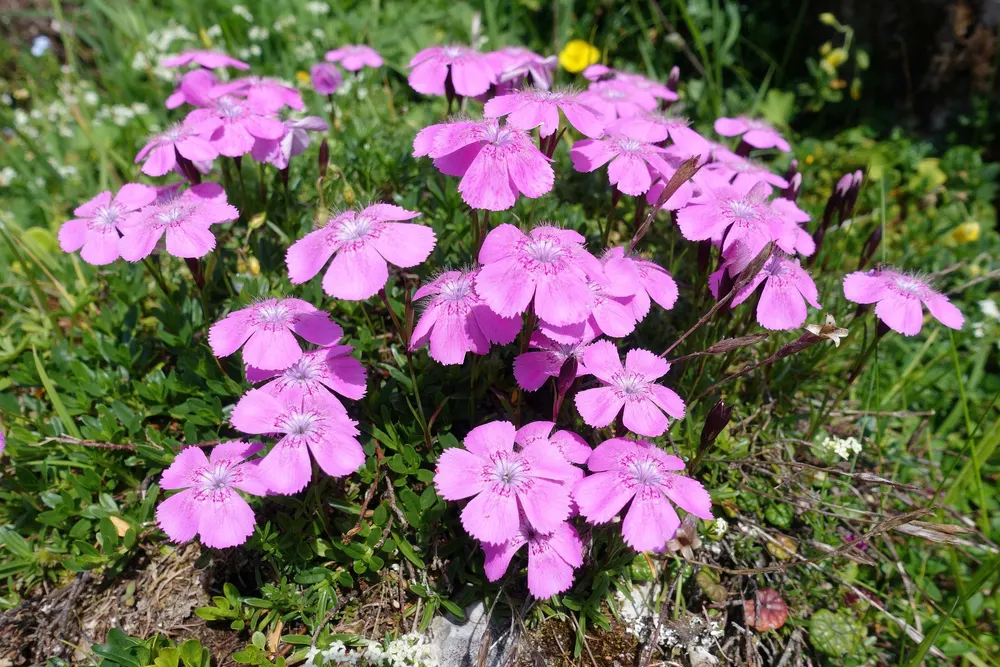
Photo: Tigerente, CC BY 4.0 (via Wikimedia Commons)
Alpine Pink
Dianthus alpinus
Also known as Alpine Dianthus, Rock Pink
Key benefits
✦Traditional uses
✦Alpine pink has always belonged more to the mountain than to the kitchen garden. Botanists and alpine plant collectors have prized it since the 1700s for the way it clings to bare Alpine scree and rewards that hardship with a flush of vivid, fringed, clove-scented blooms each summer. It belongs to the same beloved family as the garden pinks and clove carnations that European cottage gardeners have grown for centuries, their petals steeped into wine, vinegar, and sugar for their spicy fragrance, though alpine pink itself, being a true high-altitude specialist, remained a treasure of rock gardeners and botanical collectors rather than a cottage herb in its own right. Today it is grown chiefly for the pleasure of coaxing a piece of the high Alps into a trough or rockery at home.
How to grow & use it
✦The full apothecary for Alpine Pink
Traditional remedies and step-by-step preparations, a complete growing guide, and how to harvest, dry, and store it, all unlocked with HerbLens Unlimited.
- ✦Remedies & preparations
- ✦ Growing guide
- ✦Harvest & storage
From under $6 a month. Free plant identifications always included.
- ✦Thyme
- ✦Lavender
- ✦Yarrow
- ✦Garden pinks (Dianthus plumarius)
- ✦Clove carnation (Dianthus caryophyllus)
“For the scrappy, sun-baked patch of stone or scree that needs a cushion of fragrant, cheerful pink where little else will grow.”
The genus name Dianthus comes from the Greek dios, meaning divine, and anthos, meaning flower, giving these blooms the old title flower of the gods, even though Dianthus alpinus itself makes its home in some of the harshest, rockiest ground the Alps have to offer.
Alpine pink is not known to be toxic and is safe to grow and handle as an ornamental, though it has no documented culinary or medicinal use.