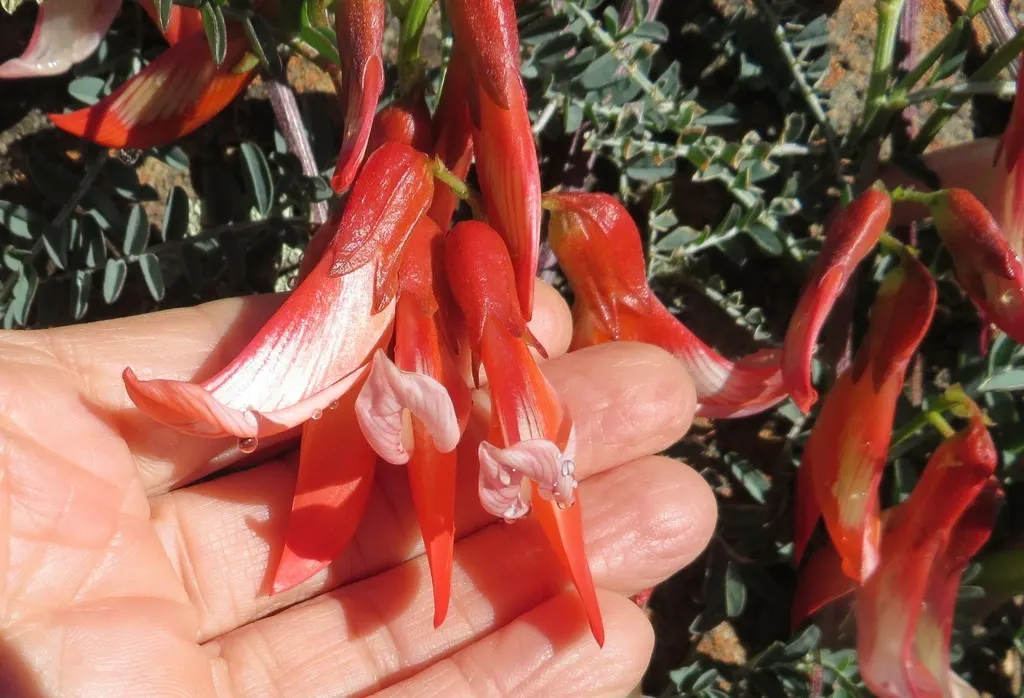
Photo: (c) linkie, CC BY (via iNaturalist)
Bloukanna
Sutherlandia microphylla
Also known as Cancer bush, Kankerbos, Small-leaved cancer bush, Balloon pea, Sutherlandia
Key benefits
✦Traditional uses
✦Long before it found its way into wellness shops, this small silvery shrub was a household standby for the Khoikhoi and Nama peoples of the arid Northern Cape, who reached for it during almost any serious illness, fever, or long convalescence. Its Afrikaans name, kankerbos, means cancer bush, but it was traditionally given for a whole range of wasting conditions, low appetite, and general depletion, not for cancer specifically. Traveling farmers and missionaries later adopted it too, brewing the bitter leaves into a tonic tea meant to steady the body and lift a person's spirits during hard, dry seasons. Over generations it earned a quiet reputation as the herb you kept in the cupboard for whenever someone in the household was simply not themselves.
Growing guide
✦Fresh to dried
✦Traditional preparations
✦Bloukanna Bitter Tonic Tea
A traditional infusion used as a general tonic during times of low energy, stress, or recovery.
How it's made. Steep 1/2 teaspoon of the dried leaf in 250 ml of just-boiled water for 8 to 10 minutes, then strain. Traditionally taken as a single modest cup, not repeated more than once a day.
- ✦Rooibos
- ✦Honeybush
- ✦Ginger
- ✦Astragalus
- ✦Echinacea
“For the dry, weary stretches when the body feels worn thin and needs quiet fortitude.”
The plant's papery, air-filled seed pods inflate like tiny lanterns as they ripen, and children in the Karoo have long popped them underfoot or used them as rattling toys, long before anyone thought to steep the leaves for tea.
Bloukanna is traditionally avoided during pregnancy and breastfeeding. It may interact with immunosuppressant or antiretroviral medications, and isn't meant for long, uninterrupted daily use.