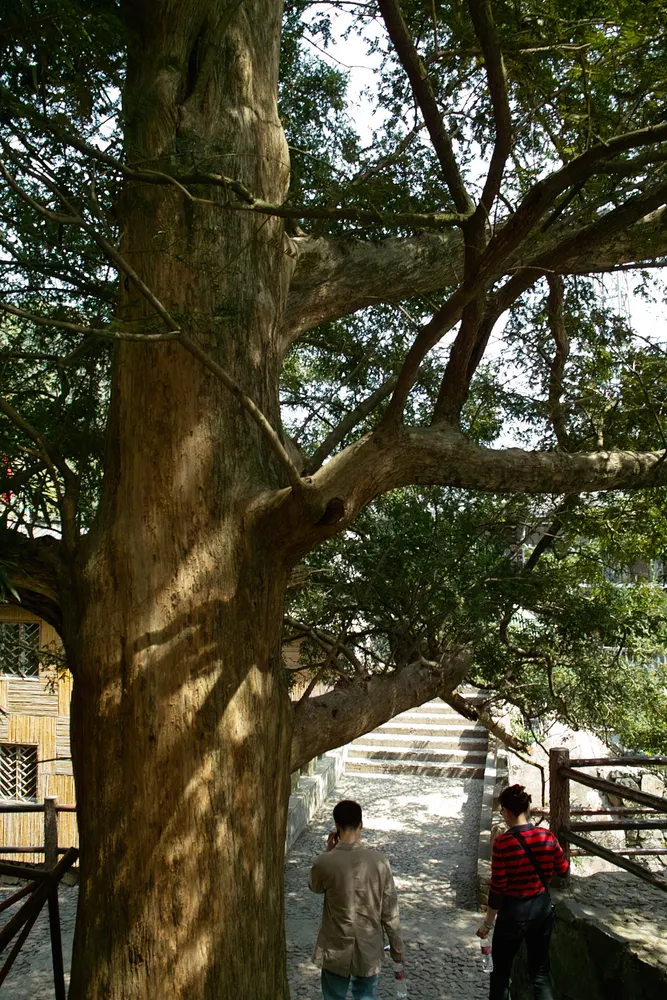
Photo: Farm, CC BY 3.0 (via Wikimedia Commons)
Chinese Torreya
Torreya grandis
Also known as Chinese Nutmeg-Yew, Feizi, Xiangfei, Chinese Torreya Nut
Key benefits
✦Traditional uses
✦In the misty hill country of Zhejiang province, families have tended Torreya grandis groves for over a thousand years, some of the old mother trees still bearing nuts today. The seed, known in Chinese medicine as feizi, was recorded in Li Shizhen's sixteenth century Compendium of Materia Medica as a remedy to expel intestinal parasites, and it was traditionally chewed or simmered to ease coughs and gently move the bowels. Long before it was studied for these uses, the roasted nut itself was already treasured as a delicacy, sent as tribute to emperors and served at festival tables. It remains one of China's most storied nuts, equal parts pantry treasure and old household remedy.
How to grow & use it
✦The full apothecary for Chinese Torreya
Traditional remedies and step-by-step preparations, a complete growing guide, and how to harvest, dry, and store it, all unlocked with HerbLens Unlimited.
- ✦Remedies & preparations
- ✦ Growing guide
- ✦Harvest & storage
From under $6 a month. Free plant identifications always included.
- ✦Ginger
- ✦Chinese licorice root
- ✦Jujube (red date)
- ✦Pine nuts
- ✦Pumpkin seeds
“For a nutty, resinous bite carried down through a thousand years of Chinese mountain tradition.”
Some Torreya grandis trees in Zhejiang's Fenghua and Shaoxing hills are recorded to be over a thousand years old and still bear nuts each autumn, making the harvest from a single ancient tree a small, storied event in the local calendar.
Torreya seeds are traditionally roasted before eating, since raw seed is astringent and hard to digest. This tree is related to yews but is distinct from the true, toxic Taxus species, so only source seeds from a known, reputable supplier.