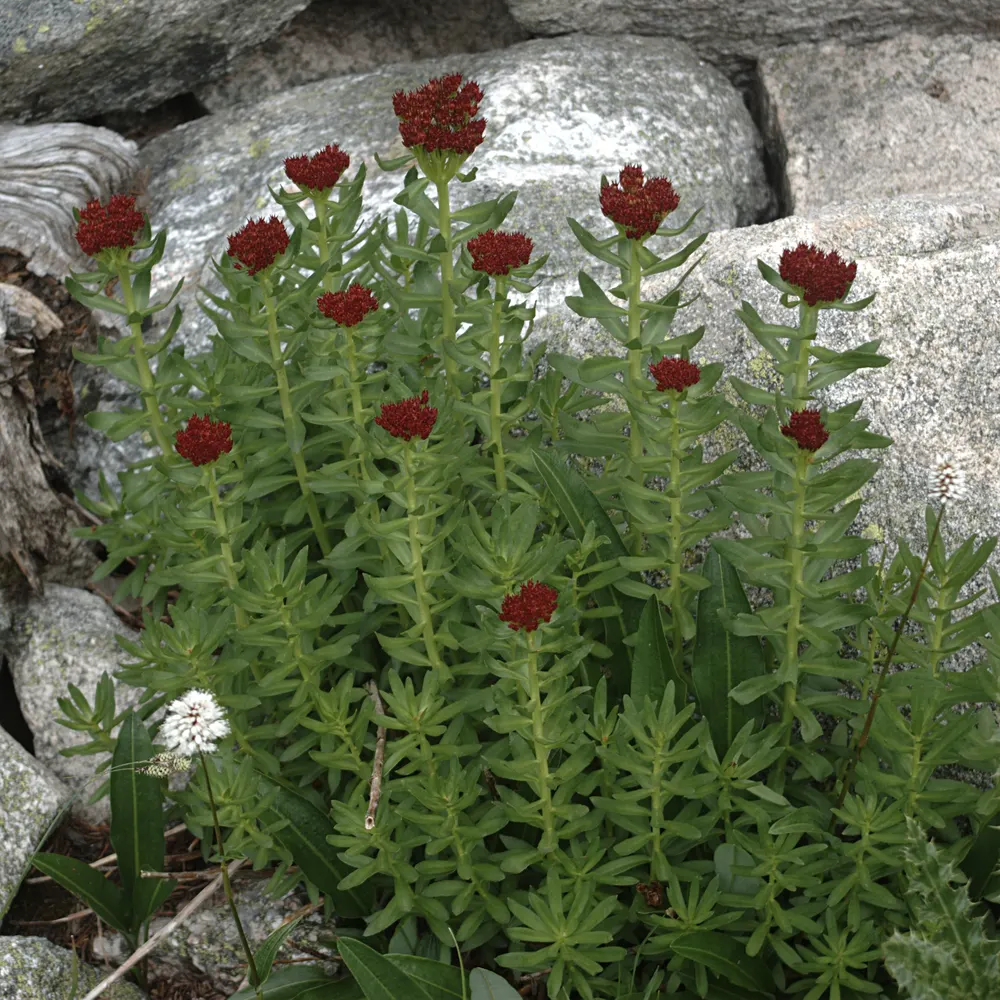
Photo: JerryFriedman, CC BY-SA 3.0 (via Wikimedia Commons)
Kings Crown (Western Roseroot)
Rhodiola integrifolia
Also known as Roseroot, Western Roseroot, Ledge Stonecrop, Redpod Stonecrop, King's Crown
Key benefits
✦Traditional uses
✦Rhodiola integrifolia grows where almost nothing else can, clinging to windswept ledges and scree slopes from the Rockies to the Arctic tundra. Peoples living in these harsh, high places traditionally valued its fleshy roots as both food and tonic, digging them in the fall and treasuring them as a source of strength through long winters and hard climbs. It has long stood as the North American cousin to Rhodiola rosea, the famed roseroot of Scandinavian and Siberian herbalism, and has traditionally been used in a similar way, to help the body cope with cold, exertion, and fatigue. Modern herbalists still gather it from the wild or grow it in rock gardens, carrying that alpine tradition forward.
How to grow & use it
✦The full apothecary for Kings Crown (Western Roseroot)
Traditional remedies and step-by-step preparations, a complete growing guide, and how to harvest, dry, and store it, all unlocked with HerbLens Unlimited.
- ✦Remedies & preparations
- ✦ Growing guide
- ✦Harvest & storage
From under $6 a month. Free plant identifications always included.
- ✦Rhodiola rosea
- ✦Eleuthero (Siberian ginseng)
- ✦Licorice root
- ✦Rhodiola rosea
- ✦Eleuthero (Siberian ginseng)
“For the days that feel like a climb, when you need the quiet toughness of something that thrives above the tree line.”
Long before it was ever studied as an adaptogen, Rhodiola integrifolia's fleshy roots were a treasured trailside snack for people living at the top of the world, dug from thin mountain soil and prized simply for the lift of energy they gave after a long, cold climb.
Kings crown is stimulating and can cause jitteriness or trouble sleeping if taken late in the day. Because it's related to Rhodiola rosea, it may interact with antidepressants, stimulant medications, or blood pressure medication, and it's best avoided during pregnancy or breastfeeding.