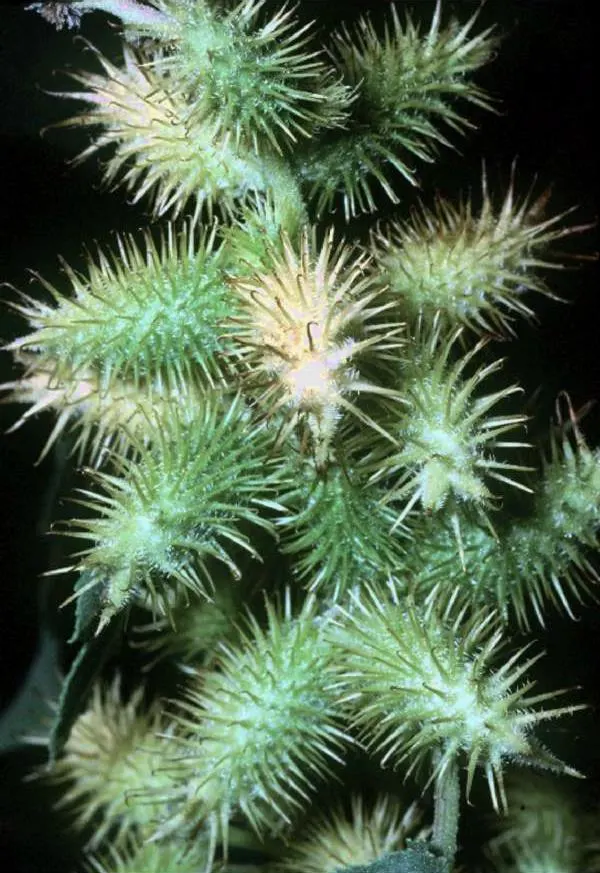
Photo: Public domain (via Wikimedia Commons)
Rough Cocklebur
Xanthium strumarium
Also known as Common Cocklebur, Clotbur, Sheep Bur, Cang Er Zi (TCM name for the fruit)
Key benefits
✦Traditional uses
✦In traditional Chinese medicine, the specially processed bur, known as Cang Er Zi, was one of the classic herbs reached for to help clear stuffy sinuses and ease sinus-related headaches, and it has a long history in formulas meant to open the nasal passages. Folk traditions in Europe and North America likewise took note of the plant, applying preparations of the bitter, resinous burs or roots to skin sores and sometimes to aching joints. But herbalists across these traditions also treated cocklebur with real caution, well aware that the raw seeds and young seedlings held a potency that could sicken livestock and people if handled carelessly. Today, cocklebur is remembered more as a plant worth knowing on sight, for the sake of avoiding it, than as an herb to keep in the home apothecary.
How to grow & use it
✦The full apothecary for Rough Cocklebur
Traditional remedies and step-by-step preparations, a complete growing guide, and how to harvest, dry, and store it, all unlocked with HerbLens Unlimited.
- ✦Remedies & preparations
- ✦ Growing guide
- ✦Harvest & storage
From under $6 a month. Free plant identifications always included.
- ✦Magnolia flower (Xin Yi Hua), its classical partner in traditional Chinese sinus formulas
- ✦Angelica dahurica (Bai Zhi), traditionally combined with it in the same formulas
- ✦Elderflower, a gentler traditional choice for stuffy sinuses
- ✦Eyebright, another herb long associated with sinus and nasal comfort
“The plant to know by its bur and its story, not by any dose: a reminder that not every wayside herb wants to be picked.”
Each spiny cocklebur actually holds two seeds tucked inside, one built to sprout the very next spring and the other programmed to wait a full extra year before germinating, a built-in insurance policy that has made this weed a favorite subject for botanists studying seed dormancy.
Rough cocklebur is a genuinely toxic plant, not a home remedy. Its seeds, and especially its seedlings at the two-leaf stage, contain carboxyatractyloside, a potent glycoside that has caused severe illness and death in livestock (pigs are especially vulnerable) and has been documented in human poisoning cases, particularly in children who ate the seeds or chewed on young seedlings. Symptoms of poisoning can include vomiting, weakness, tremors, liver damage, and in serious cases death. Because of this, no preparation, tea, tincture, or dose is given here, and this entry should not be treated as a guide to eating or brewing any part of this plant. Even the specially processed fruit used historically in East Asian medicine required careful detoxifying preparation and still carries documented risk when done incorrectly. If you are identifying cocklebur in the field, wear gloves, since the spiny burs grip skin and fur readily, keep children and grazing animals away from patches, and never let livestock browse fields where the seedlings are emerging in spring. Always consult a qualified healthcare professional, veterinarian, or licensed herbalist before considering any use of this or any toxic plant, and treat this entry as identification knowledge, not a recipe.