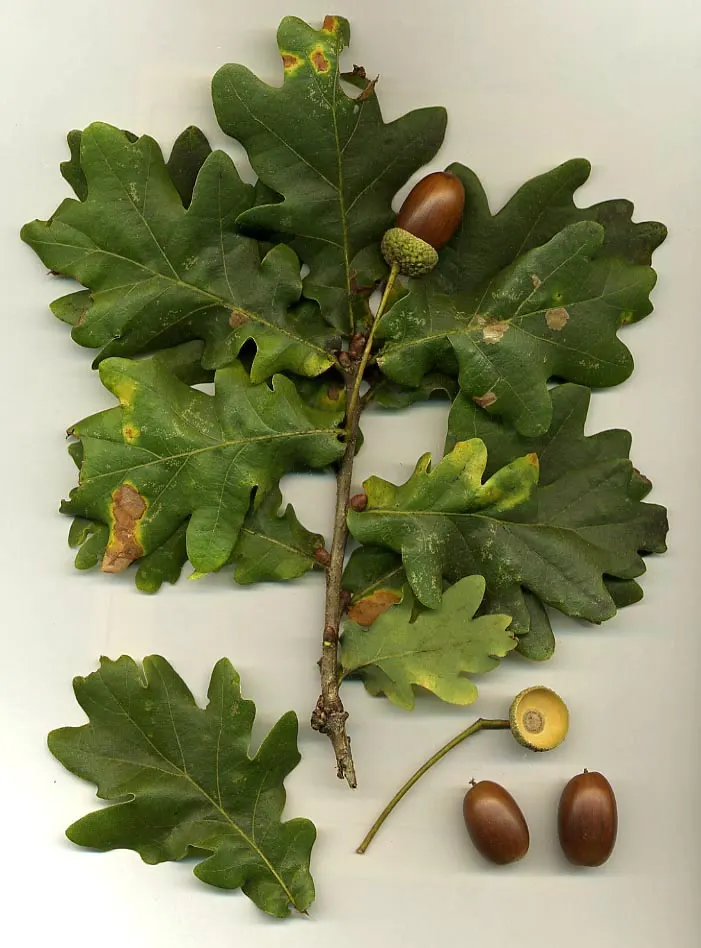
Photo: CC BY-SA 3.0 (via Wikimedia Commons)
English Oak
Quercus robur
Also known as Pedunculate Oak, Common Oak, European Oak, French Oak
Key benefits
✦Traditional uses
✦The English oak has stood as the emblematic tree of European forests for centuries, and its bark has been gathered by herbalists since antiquity for its powerful astringency. Country healers stripped the tannin rich bark from young branches each spring, drying it for decoctions used to firm the gums, soothe a raw throat, and calm minor digestive upset. Oak galls, the odd round growths left by wasps on the branches, were prized by scribes for making ink, and the acorns themselves, once carefully leached of their bitterness, fed both livestock and people through lean winters. Long before it was studied for its tannins, the oak was simply trusted as the sturdy, steadying tree at the heart of the village.
How to grow & use it
✦The full apothecary for English Oak
Traditional remedies and step-by-step preparations, a complete growing guide, and how to harvest, dry, and store it, all unlocked with HerbLens Unlimited.
- ✦Remedies & preparations
- ✦ Growing guide
- ✦Harvest & storage
From under $6 a month. Free plant identifications always included.
- ✦Sage
- ✦Chamomile
- ✦Yarrow
- ✦Witch hazel
- ✦Blackberry leaf
“For the old, steadying astringent that has calmed sore throats and scraped knees since before anyone was writing it down.”
Oak galls, the small round growths caused by gall wasps on oak twigs, were the source of iron gall ink, the standard writing ink in Europe for over a thousand years, used for everything from the Magna Carta to Bach's handwritten scores.
Oak bark is high in tannins, so large or long-term internal use can irritate the stomach and interfere with iron absorption, and it isn't recommended internally during pregnancy or nursing. Raw acorns are toxic to livestock like cattle and horses in quantity, and traditional human use always involved thorough leaching to remove the tannins first.