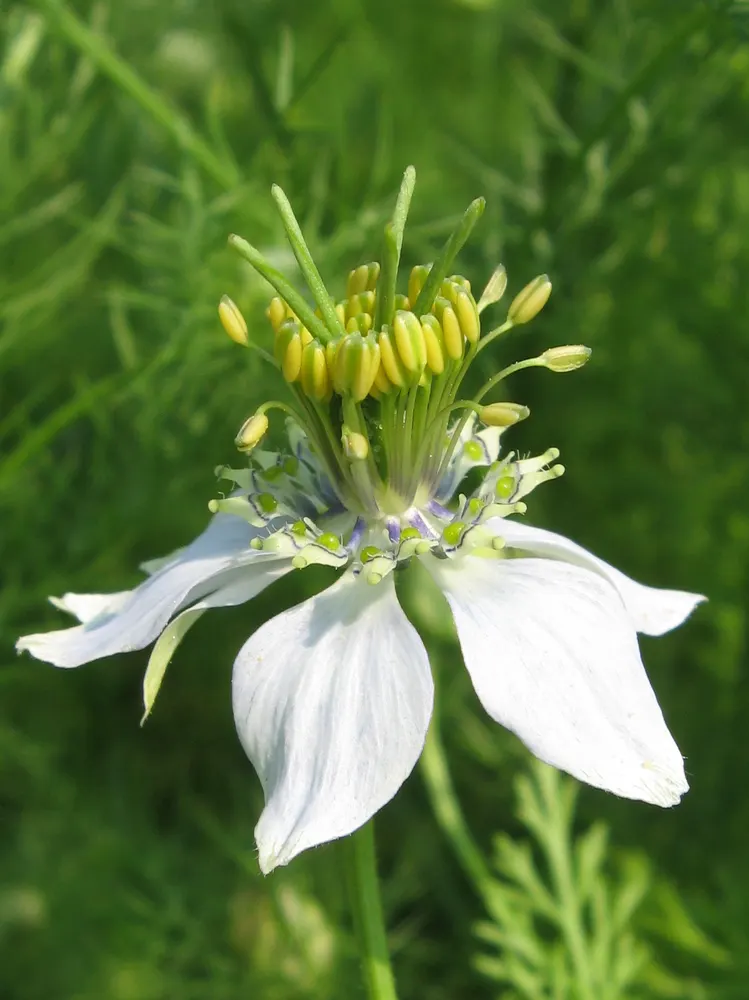
Photo: AndreHolz at English Wikipedia, CC BY-SA 3.0 (via Wikimedia Commons)
Black Seed
Nigella sativa
Also known as Black Cumin, Kalonji, Nigella, Black Caraway, Roman Coriander
Key benefits
✦Traditional uses
✦Black seed has been kept close at hand in kitchens and medicine chests from Egypt to India for thousands of years, ground into bread, stirred into honey, or steeped as a warming tea. In Unani and Ayurvedic traditions it was reached for to settle the stomach and ease coughs and congestion, while in the Middle East it earned a reputation as something close to a cure-all. Across these traditions, the tiny black seeds carried an outsized reputation, valued as much for daily nourishment as for their gentle medicinal warmth.
How to grow & use it
✦The full apothecary for Black Seed
Traditional remedies and step-by-step preparations, a complete growing guide, and how to harvest, dry, and store it, all unlocked with HerbLens Unlimited.
- ✦Remedies & preparations
- ✦ Growing guide
- ✦Harvest & storage
From under $6 a month. Free plant identifications always included.
- ✦Honey
- ✦Cumin
- ✦Fennel
- ✦Cumin seed
- ✦Sesame seed
“For an ancient little seed that has seasoned bread, sweetened honey, and settled bellies for four thousand years.”
Jars of black seed were found among the burial treasures in the tomb of King Tutankhamun, a sign of just how highly the ancient Egyptians prized this small, sharp-tasting seed.
Black seed is safe as a culinary spice. Concentrated preparations or black seed oil may interact with blood thinners, diabetes medications, and blood pressure medications, and should be avoided in therapeutic amounts during pregnancy.