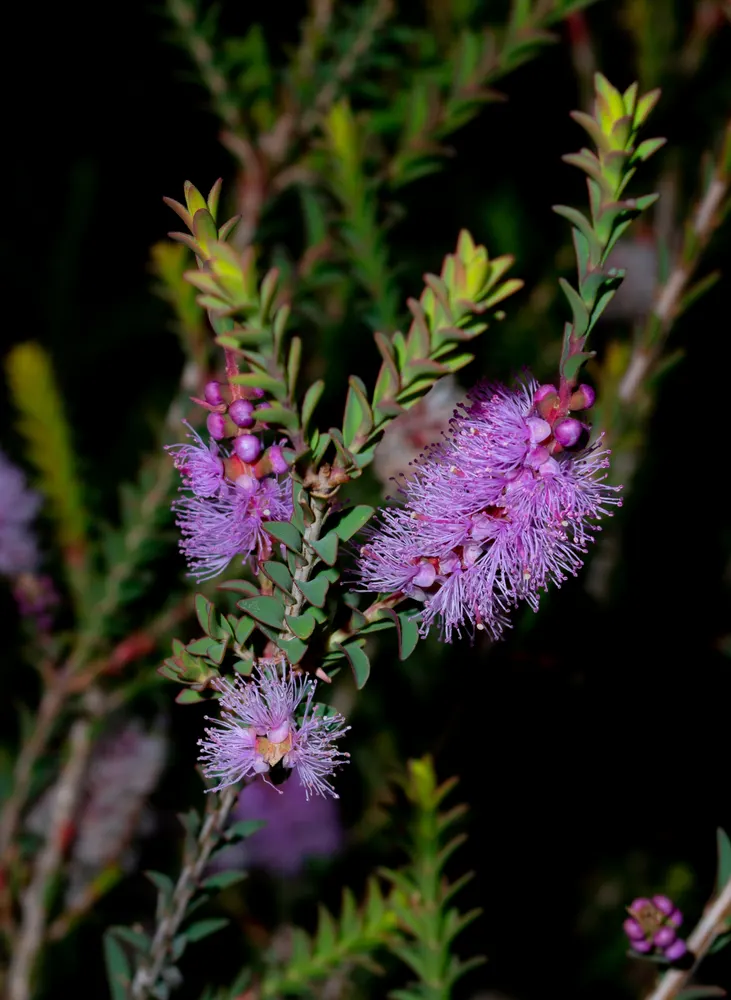
Photo: Solarence, CC0 (via Wikimedia Commons)
Cross-Leaved Honey-Myrtle
Melaleuca decussata
Also known as Totem Poles, Lilac Honey-Myrtle, Cross-Leaf Honey-Myrtle
Key benefits
✦Traditional uses
✦Melaleuca decussata belongs to a genus made famous by its medicinal cousins, especially tea tree, but this particular honey-myrtle earned its keep in a different way. Across the dry scrublands of South Australia and Victoria, it grew as one of many small-leaved shrubs that sheltered birds and insects and offered nectar through the cooler months, and it was this quiet ecological usefulness, rather than any medicine chest reputation, that carried it into cultivation. Gardeners in the twentieth century began prizing it for the same reasons the bush always had, its toughness, its shelter, and its haze of purple bloom, and it has since become a mainstay of native hedging and wildlife plantings far beyond its original range. Unlike Melaleuca alternifolia, it does not carry a documented history of herbal or antiseptic use, so its story is really one of garden and habitat rather than remedy.
How to grow & use it
✦The full apothecary for Cross-Leaved Honey-Myrtle
Traditional remedies and step-by-step preparations, a complete growing guide, and how to harvest, dry, and store it, all unlocked with HerbLens Unlimited.
- ✦Remedies & preparations
- ✦ Growing guide
- ✦Harvest & storage
From under $6 a month. Free plant identifications always included.
- ✦Grevillea
- ✦Correa
- ✦Banksia
- ✦Melaleuca wilsonii (violet honey-myrtle)
- ✦Melaleuca thymifolia
“For the hedge that hums with honeyeaters and holds its color through the driest stretch of summer.”
The species name decussata comes from the Latin decussatus, meaning crossed like an X, describing the way its tiny leaves are arranged in opposite pairs set at right angles all along the stem, a pattern botanists call decussate phyllotaxy.
Cross-leaved honey-myrtle has no tradition of internal use, and its foliage oils can irritate skin or stomach if chewed. Concentrated Melaleuca oils are toxic to pets, so keep trimmings away from animals.