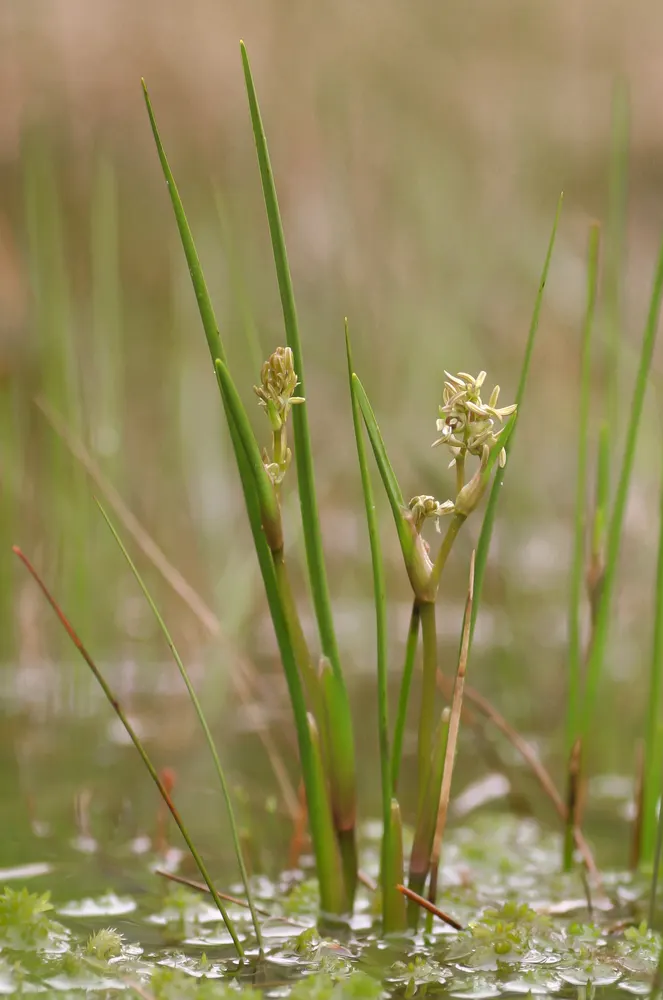
Photo: Bertblok, CC BY-SA 3.0 (via Wikimedia Commons)
Pod Grass
Scheuchzeria palustris
Also known as Rannoch-rush
Key benefits
✦Traditional uses
✦Pod Grass has no meaningful tradition as a food, medicine, or craft material among the peoples who share its boggy range. Its real story is a botanical one: it is the sole living species in its own family, Scheuchzeriaceae, a curious little offshoot of the flowering-plant family tree that fascinated the naturalists who first went hunting for it across the peat bogs of Europe and Scotland. What traditional value it holds is as a marker of untouched, ancient wetland, a plant whose mere presence tells a bog scientist and a wandering naturalist alike that they have found somewhere truly wild and undisturbed.
How to grow & use it
✦The full apothecary for Pod Grass
Traditional remedies and step-by-step preparations, a complete growing guide, and how to harvest, dry, and store it, all unlocked with HerbLens Unlimited.
- ✦Remedies & preparations
- ✦ Growing guide
- ✦Harvest & storage
From under $6 a month. Free plant identifications always included.
“For the quiet thrill of finding a bog's rarest, least-sung resident, not for the basket or the kettle.”
Pod Grass is the only species in its entire botanical family, Scheuchzeriaceae, named for the eighteenth-century Swiss naturalist Johann Jacob Scheuchzer. In Britain it is remembered as the Rannoch-rush after Rannoch Moor in Scotland, one of the very few places it was ever recorded there, and paleobotanists still prize its unmistakable pollen grains as a marker for reading the age of ancient peat deposits.
Not eaten or used medicinally, and there's no safety data to support ingesting it.