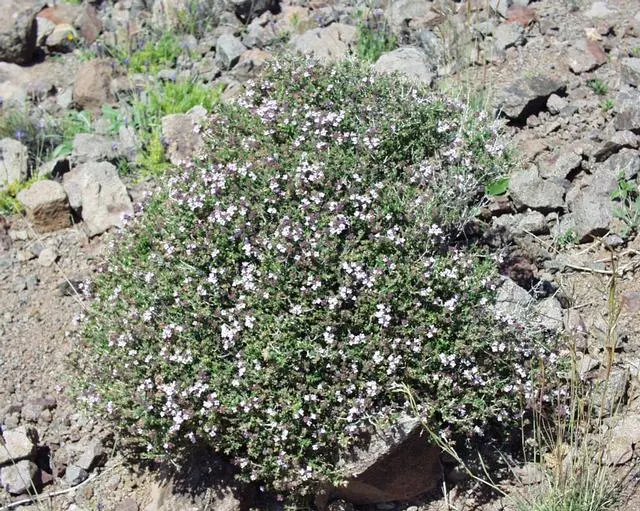
Photo: Henry Brisse (upload by user:Abalg), CC BY-SA 3.0 (via Wikimedia Commons)
Thyme
Thymus vulgaris
Also known as Garden Thyme, Common Thyme, French Thyme
Key benefits
✦Traditional uses
✦Thyme has been a fixture of the herbalist's shelf since antiquity, when Egyptians used it in embalming and Greeks burned it as temple incense, believing its sharp fragrance carried courage and strength. Roman soldiers reportedly bathed in thyme-infused water before battle, and medieval women embroidered a sprig into scarves given to departing knights for the same reason. Long before it settled into its modern role as a kitchen staple, thyme was steeped into teas and gargles to traditionally ease coughs, sore throats, and chesty colds, a use that has followed the herb across centuries of folk medicine. Its small, tough leaves hold an outsized reputation, warm, resinous, and a little bit medicinal even in the pot.
How to grow & use it
✦The full apothecary for Thyme
Traditional remedies and step-by-step preparations, a complete growing guide, and how to harvest, dry, and store it, all unlocked with HerbLens Unlimited.
- ✦Remedies & preparations
- ✦ Growing guide
- ✦Harvest & storage
From under $6 a month. Free plant identifications always included.
- ✦Rosemary
- ✦Sage
- ✦Lemon Balm
- ✦Oregano
- ✦Winter Savory
“When a stubborn cough won't quit, and the kitchen needs seasoning too.”
The name thyme traces back to the Greek word thymos, meaning courage or spirit, which is why ancient soldiers were said to bathe in thyme water before heading into battle.
Culinary amounts of thyme leaf are widely regarded as safe, but thyme essential oil is far more concentrated and should never be taken internally or applied undiluted, as it can be toxic and irritating to skin and mucous membranes even in small quantities. Thyme, especially in medicinal or concentrated doses, is generally avoided during pregnancy, and it may interact with blood-thinning medications and thyroid medications. Those allergic to other Lamiaceae family herbs, such as oregano, mint, or sage, may also react to thyme. As with any herb used beyond the kitchen, it is wise to talk with a qualified healthcare professional before using thyme medicinally, particularly if pregnant, nursing, or taking other medications.