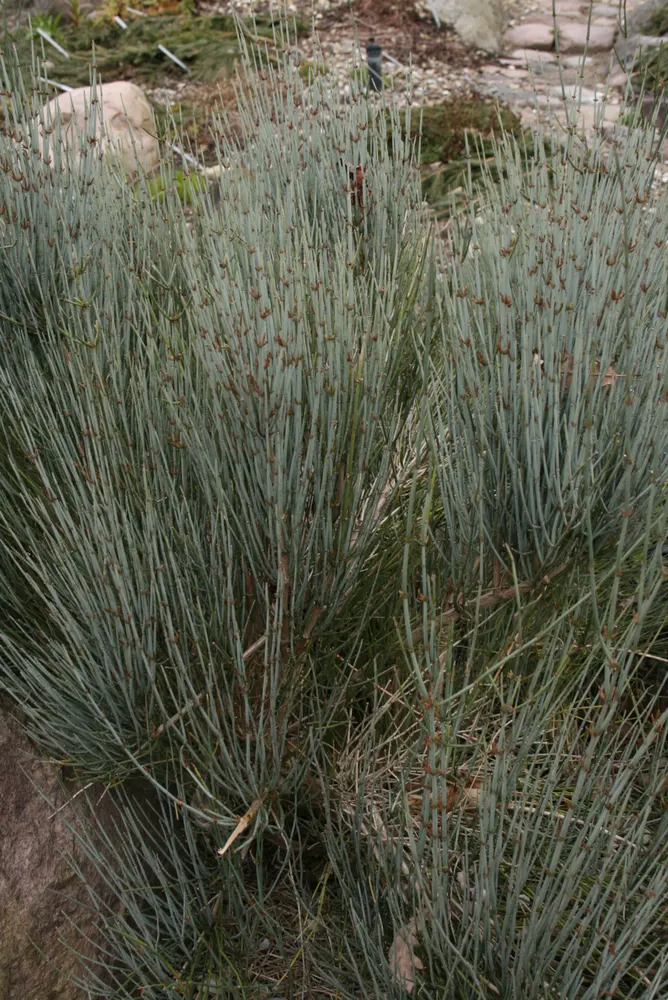
Photo: Sten Porse, CC BY-SA 3.0 (via Wikimedia Commons)
Ma Huang (Intermediate Jointfir)
Ephedra intermedia
Also known as Zhong Ma Huang, Intermediate Jointfir, Joint Pine, Desert Ephedra
Key benefits
✦Traditional uses
✦For over two thousand years, Chinese physicians reached for the dried stems of ma huang, a group that includes Ephedra intermedia alongside its close relatives E. sinica and E. equisetina, to open the chest and lungs during stubborn coughs, wheezing, and colds that settled deep. It was a cornerstone of classical formulas like Ma Huang Tang, always combined thoughtfully with other herbs and used only for short stretches under a physician's watch. The plant's real claim to fame in the modern world came in the 1920s, when chemists isolated its active alkaloid, ephedrine, a discovery that reshaped Western pharmacology and eventually led to the decongestants many people still reach for today. It is a humble desert shrub that quietly changed the course of medicine.
How to grow & use it
✦The full apothecary for Ma Huang (Intermediate Jointfir)
Traditional remedies and step-by-step preparations, a complete growing guide, and how to harvest, dry, and store it, all unlocked with HerbLens Unlimited.
- ✦Remedies & preparations
- ✦ Growing guide
- ✦Harvest & storage
From under $6 a month. Free plant identifications always included.
- ✦Guizhi (cinnamon twig), its classic partner in traditional formulas
- ✦Xing Ren (bitter apricot kernel)
- ✦Gan Cao (licorice root), used to moderate and harmonize the formula
- ✦Thyme, for gentle traditional respiratory support
- ✦Mullein leaf, for a soothing, non-stimulant alternative
“The shrub behind one of pharmacology's most consequential discoveries, respected today from a careful distance.”
Ephedra is one of the oldest surviving plant lineages on Earth, with pollen fossils stretching back over 100 million years, and it was even found scattered in the burial site of a Neanderthal grave at Shanidar Cave, leading early researchers to wonder if it was placed there deliberately.
Ephedra intermedia is not a plant for home teas or remedies. Its green jointed stems contain ephedrine and pseudoephedrine, potent stimulant alkaloids that can raise heart rate and blood pressure sharply and have been linked to heart attack, stroke, seizure, and death, particularly when combined with caffeine or other stimulants. Because of this risk, the United States FDA banned ephedrine-alkaloid dietary supplements in 2004, and the plant remains tightly regulated or restricted in many countries. It should never be used by anyone who is pregnant, has heart disease, high blood pressure, thyroid disease, or glaucoma, or who takes MAOIs, stimulant medications, or other heart or blood pressure drugs. Any traditional or clinical use of this plant belongs strictly in the hands of a licensed physician or qualified herbal practitioner, never in a home kitchen.