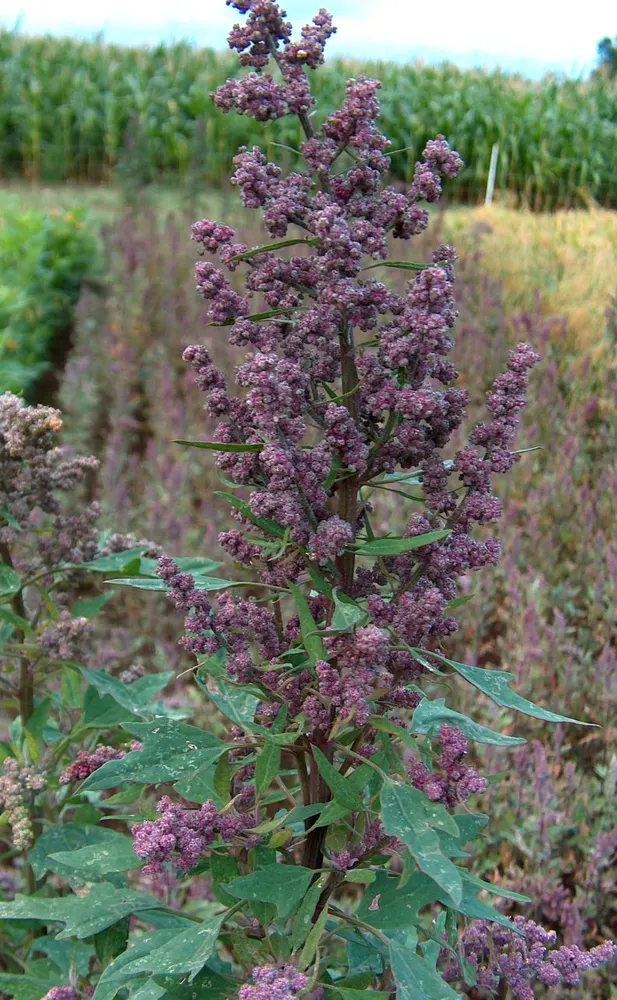
Photo: User:MarkusHagenlocher, CC BY-SA 3.0 (via Wikimedia Commons)
Quinoa
Chenopodium quinoa
Also known as Mother Grain, Chisiya Mama, Inca Rice, Andean Grain
Key benefits
✦Traditional uses
✦Quinoa was cultivated in the Andes for at least three thousand years, and the Inca held it in such regard that they called it chisiya mama, the mother grain, and opened each planting season with the emperor sowing the first seeds by hand with a golden implement. It served as a staple food across the mountains, valued for keeping farmers and travelers fed through long, thin-aired days at altitude where few other crops would grow. Beyond the seed, the young leaves were traditionally eaten as a leafy green much like its cousin lamb's quarters, and the bitter, soap-like coating on the raw seed was traditionally rubbed off and used as a simple cleanser. After the Spanish conquest, quinoa cultivation was suppressed in favor of European grains, and it survived largely in remote highland communities and home gardens until its recent return to tables around the world.
How to grow & use it
✦The full apothecary for Quinoa
Traditional remedies and step-by-step preparations, a complete growing guide, and how to harvest, dry, and store it, all unlocked with HerbLens Unlimited.
- ✦Remedies & preparations
- ✦ Growing guide
- ✦Harvest & storage
From under $6 a month. Free plant identifications always included.
- ✦Mint
- ✦Cinnamon
- ✦Lemon balm
- ✦Amaranth
- ✦Millet
In 1996, NASA included quinoa in research on crops suited for long-duration space travel, largely because a single grain can supply all the essential amino acids the body needs, a rare feat in the plant world.
Quinoa is a safe, widely eaten food, but rinse it well before cooking, since the raw seed's outer coating contains bitter saponins that can cause stomach upset if not washed off. Most store-bought quinoa is already pre-rinsed.