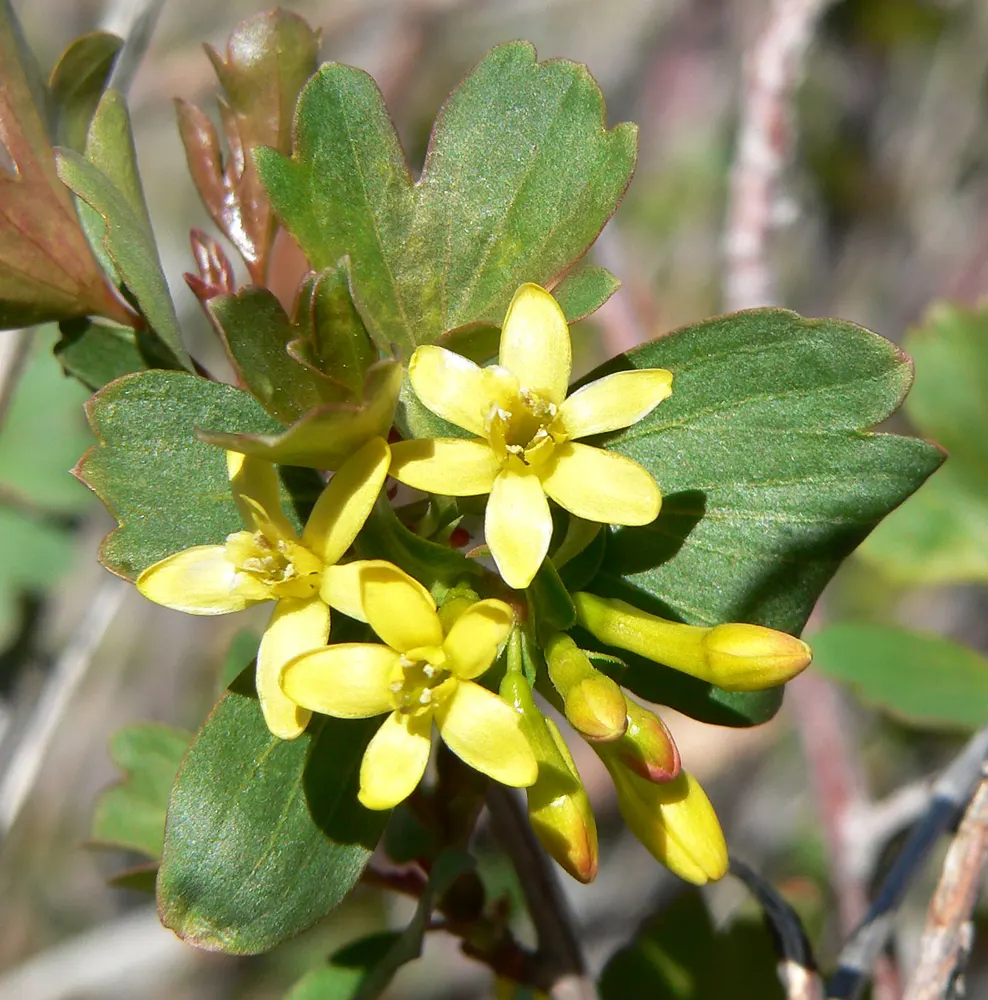
Photo: Stan Shebs, CC BY-SA 3.0 (via Wikimedia Commons)
Golden Currant
Ribes aureum
Also known as Golden Currant, Clove Currant, Buffalo Currant, Missouri Currant
Key benefits
✦Traditional uses
✦Golden currant has fed people across the American West for generations. More than a dozen Native nations, including the Shoshone, Paiute, Navajo, and Cheyenne, gathered the ripe berries to eat fresh, dry for winter, or pound together with fat and meat into pemmican. Meriwether Lewis collected and described the shrub in 1806, struck by its fragrant, clove-scented blossoms. Because it thrived along the same waterways travelers depended on, golden currant became a reliable, welcome taste of sweetness on long journeys.
How to grow & use it
✦The full apothecary for Golden Currant
Traditional remedies and step-by-step preparations, a complete growing guide, and how to harvest, dry, and store it, all unlocked with HerbLens Unlimited.
- ✦Remedies & preparations
- ✦ Growing guide
- ✦Harvest & storage
From under $6 a month. Free plant identifications always included.
- ✦Rose hips
- ✦Elderberry
- ✦Wild mint
- ✦Black currant
- ✦Red currant
“For a taste of the old West, sweet and a little wild, gathered along a creek in the heat of summer.”
Golden currant's spring flowers give off a spicy, clove-like fragrance so distinct that early botanists and travelers, including Meriwether Lewis, singled it out in their notes long before anyone thought to describe the berries themselves.
Ripe golden currant berries are safe to eat, but the unripe berries and leaves are not eaten and can cause stomach upset.