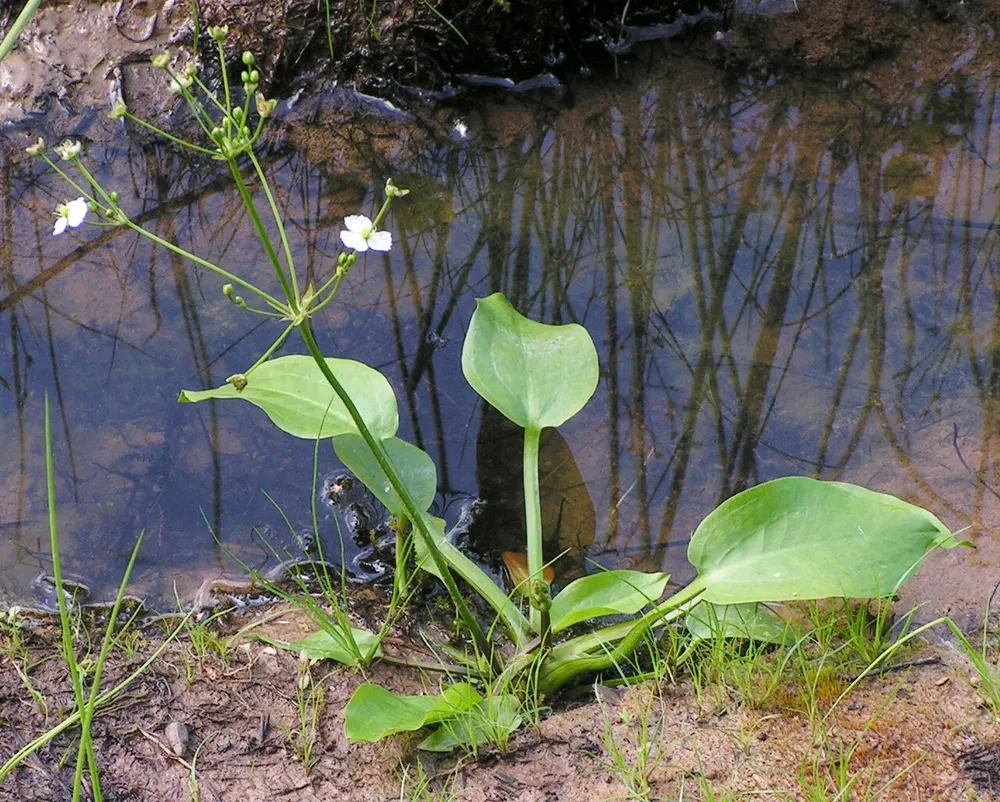
Photo: Bff, CC BY-SA 3.0 (via Wikimedia Commons)
Oriental Water Plantain
Alisma orientale
Also known as Ze Xie, Water Plantain, Alisma Rhizome, Mizuobako (Japanese)
Key benefits
✦Traditional uses
✦Known in Chinese medicine as Ze Xie, this unassuming marsh plant has been dug from paddy edges and pond banks for over two thousand years, its starchy rhizome dried and sliced into one of the most frequently prescribed roots in the Chinese pharmacopoeia. Herbalists traditionally reached for it when the body felt waterlogged or heavy, using it to help move what practitioners called dampness, whether that showed up as puffiness, sluggish urination, or a feeling of internal heaviness. It found its way into classic formulas such as Liu Wei Di Huang Wan, where it was paired to balance richer, more tonifying roots. In Japan it is called mizuobako, and it has long carried a quiet reputation as the herb that helps the body let go of what it no longer needs.
How to grow & use it
✦The full apothecary for Oriental Water Plantain
Traditional remedies and step-by-step preparations, a complete growing guide, and how to harvest, dry, and store it, all unlocked with HerbLens Unlimited.
- ✦Remedies & preparations
- ✦ Growing guide
- ✦Harvest & storage
From under $6 a month. Free plant identifications always included.
- ✦Poria (Fu Ling)
- ✦Atractylodes (Bai Zhu)
- ✦Polyporus (Zhu Ling)
- ✦Poria
- ✦Plantain leaf (Plantago)
“For the days you feel waterlogged, heavy, and in need of gentle draining.”
The Chinese name Ze Xie translates roughly to marsh drainer, a name that describes almost exactly what herbalists believed the root did in the body, quietly moving stagnant water along.
Alisma orientale has a pronounced diuretic action, so it should not be used by anyone with kidney disease, low blood pressure, or an existing fluid or electrolyte imbalance without qualified guidance, and it may amplify the effect of diuretic or blood pressure medications. Traditional Chinese medicine texts advise against its use during pregnancy and caution that large or prolonged doses can cause stomach upset, loose stools, or lightheadedness. It is not considered a toxic plant when used in traditional culinary or tea amounts, but as with any herb that affects fluid balance and kidney function, please talk to a qualified herbalist or healthcare provider before using it, especially alongside any prescription medication.