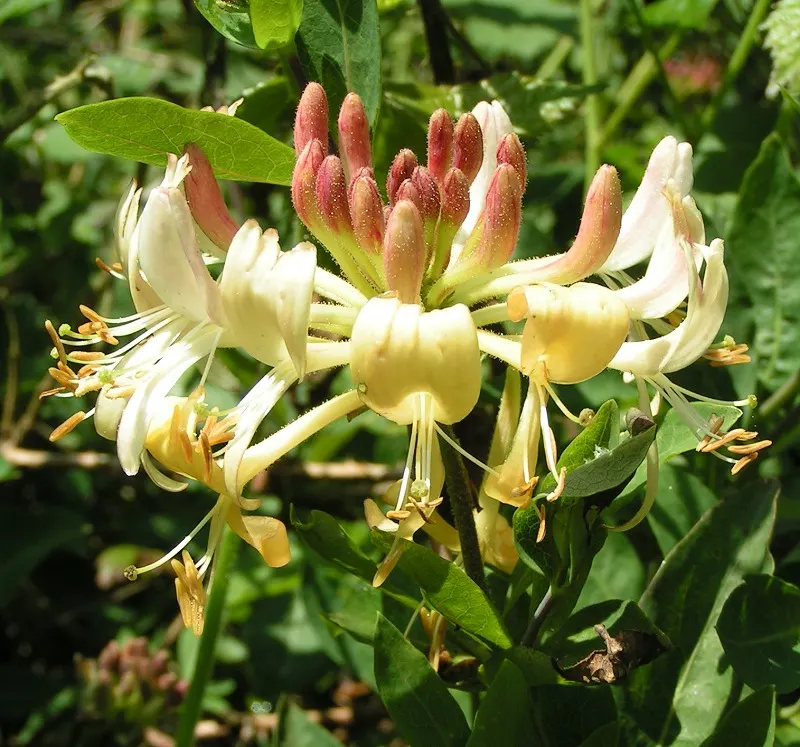
Photo: CC BY-SA 3.0 (via Wikimedia Commons)
Honeysuckle
Lonicera periclymenum
Also known as Woodbine, European Honeysuckle, Common Honeysuckle
Key benefits
✦Traditional uses
✦Woodbine has climbed the hedgerows and cottage garden trellises of Europe for centuries, prized as much for its heady evening perfume as for its old country remedies. Village herbalists gathered the trumpet-shaped blossoms to steep into soothing syrups and cordials meant to comfort a scratchy throat or a nagging cough through the cold months. The flowers were also worked into gentle washes said to calm and freshen the skin. Its cousin from East Asia, Lonicera japonica, became the more famous medicinal honeysuckle in traditional Chinese medicine, but the European woodbine kept its own quiet place in folk kitchens and still rooms.
How to grow & use it
✦The full apothecary for Honeysuckle
Traditional remedies and step-by-step preparations, a complete growing guide, and how to harvest, dry, and store it, all unlocked with HerbLens Unlimited.
- ✦Remedies & preparations
- ✦ Growing guide
- ✦Harvest & storage
From under $6 a month. Free plant identifications always included.
- ✦Elderflower
- ✦Thyme
- ✦Licorice root
- ✦Elderflower
- ✦Chamomile
“When summer evenings call for something sweetly fragrant and gently soothing.”
The species name periclymenum comes from the Greek for twining around, a nod to how the vine wraps itself so tightly counterclockwise around branches and trellises that it can leave a lasting spiral scar in the bark of a young tree.
The berries are toxic and can cause vomiting and diarrhea if eaten, so keep them away from children and pets. Only the flowers have a history of culinary use, in modest amounts, and are best avoided in pregnancy.