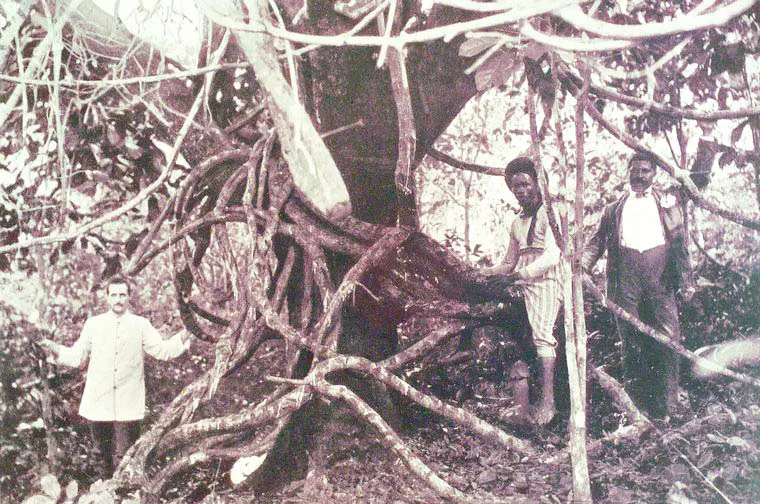
Photo: Quintan Black (not in copyright [2]), Public domain (via Wikimedia Commons)
African Rubber Vine
Landolphia owariensis
Also known as Owari Vine, Bush Rubber Vine, Landolphia Vine, Small-fruited Landolphia
Key benefits
✦Traditional uses
✦Long before synthetic and plantation rubber took over world markets, the thick vines of Landolphia owariensis were tapped across West and Central Africa for their milky latex, which was coagulated and traded as one of the continent's earliest commercial rubbers. Village foragers have prized the vine for a gentler reason too, its tangy, orange-fleshed fruit, cracked open and eaten by hand along forest paths and market roads for generations. Leaves and root bark have traditionally found their way into folk remedies for upset stomachs and minor wounds, passed down through oral herbal tradition rather than written pharmacy. The plant remains woven into everyday rural life more as food and craft material than as a formal medicine.
Growing guide
✦Fresh to dried
✦Traditional preparations
✦Fresh Fruit Pulp
The classic way Landolphia owariensis is enjoyed across its native range, a tart, faintly sweet trailside snack rich in vitamin C.
How it's made. Crack the hard rind of a ripe fruit and scoop out the seed-studded pulp. Suck the tangy flesh straight from the seeds, or stir a spoonful into a cup of water with a little honey for a refreshing traditional drink.
Leaf Infusion
In West African folk practice, a mild leaf tea has traditionally been sipped to settle a restless stomach.
How it's made. Traditionally, a small handful of fresh or dried leaves is steeped in 250 ml of just-boiled water for about 10 minutes, strained, and sipped warm.
- ✦Ginger
- ✦Hibiscus (bissap)
- ✦Lemongrass
- ✦Baobab fruit pulp
- ✦Hibiscus calyces
“For a taste of the forest path, tart, wild, and warmed by the West African sun.”
In the late 1800s and early 1900s, Landolphia vines like this one were tapped so relentlessly for wild rubber across the Congo Basin that entire forest populations were stripped bare, a grim chapter of colonial history that predates the rise of plantation rubber from the Amazon's Hevea brasiliensis.
The milky latex of this vine can irritate skin and should be avoided by anyone with a latex allergy. Only the ripe, softened fruit is eaten; the unripe rind and hard seed coats are not food.