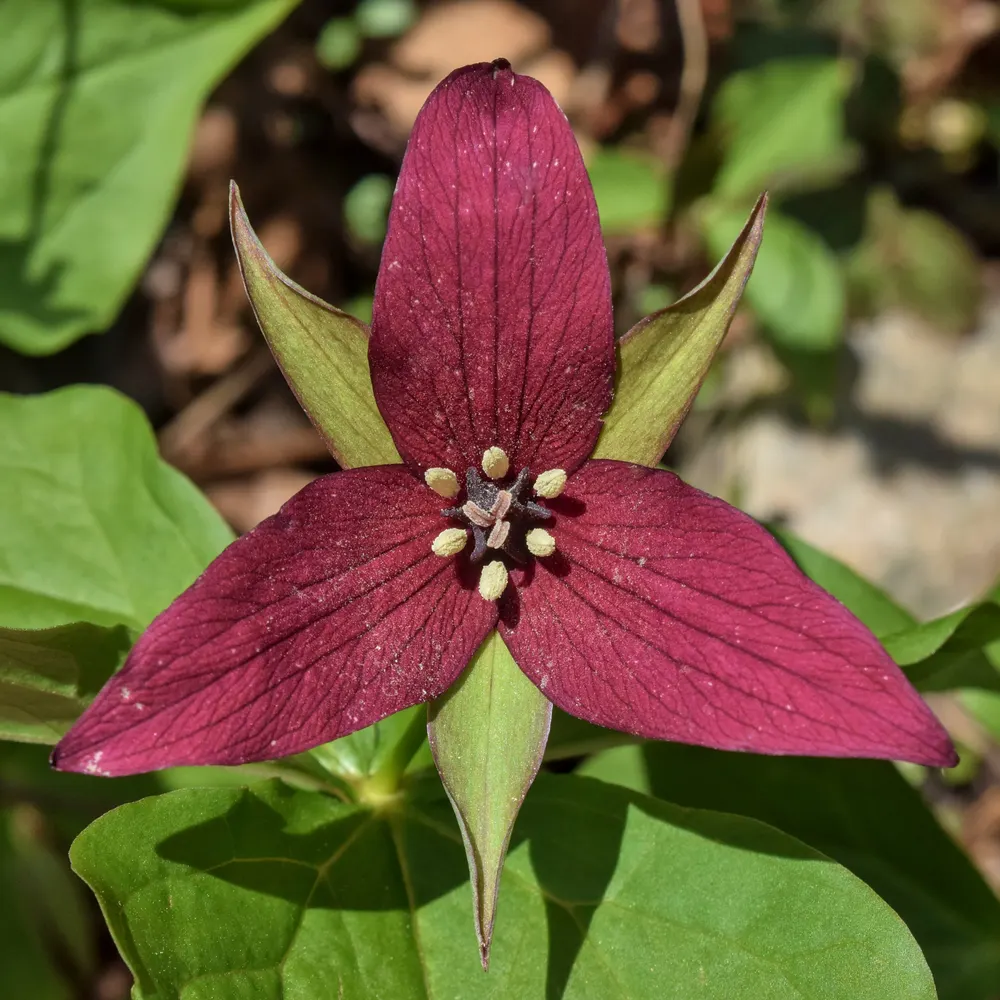
Photo: The Cosmonaut, CC BY-SA 2.5 ca (via Wikimedia Commons)
Red Trillium (Bethroot)
Trillium erectum
Also known as Wake Robin, Bethroot, Birthroot, Stinking Benjamin, Purple Trillium
Key benefits
✦Traditional uses
✦Long before it carried a Latin name, this deep-woods wildflower was known to Cherokee, Iroquois, and other Native American healers as a root for women's health and for closing wounds. Its old apothecary name, bethroot or birthroot, comes directly from its traditional role in supporting women through childbirth and heavy menstrual bleeding, a use so central that nineteenth century Eclectic physicians adopted it into their own root and herb practice. The crushed root was also pressed into service as a field poultice, laid over cuts, insect bites, and irritated skin the way a walker in the woods might reach for whatever grew nearest at hand. It remains, above all, a plant remembered for its ties to women's care and to the deep, damp forest floor it calls home.
How to grow & use it
✦The full apothecary for Red Trillium (Bethroot)
Traditional remedies and step-by-step preparations, a complete growing guide, and how to harvest, dry, and store it, all unlocked with HerbLens Unlimited.
- ✦Remedies & preparations
- ✦ Growing guide
- ✦Harvest & storage
From under $6 a month. Free plant identifications always included.
- ✦Plantain
- ✦Yarrow
- ✦Calendula
- ✦Self-heal (Prunella vulgaris)
- ✦Comfrey leaf
“For the quiet, three-petaled bloom that carries generations of women's wisdom in its root.”
Red trillium's deep maroon flower gives off a faint, unpleasant scent of rotting meat, which is exactly what earned it the nickname stinking Benjamin. Rather than bees, it draws in carrion flies and beetles, tricking them into pollination the way a corpse flower does on a much smaller, woodland scale.
Red trillium root can cause nausea or digestive upset if taken internally beyond small, supervised amounts, and its traditional use to act on the uterus means it should not be used internally during pregnancy except under a midwife's or herbalist's direct guidance. It is slow to mature and increasingly uncommon in the wild, so use only cultivated root.