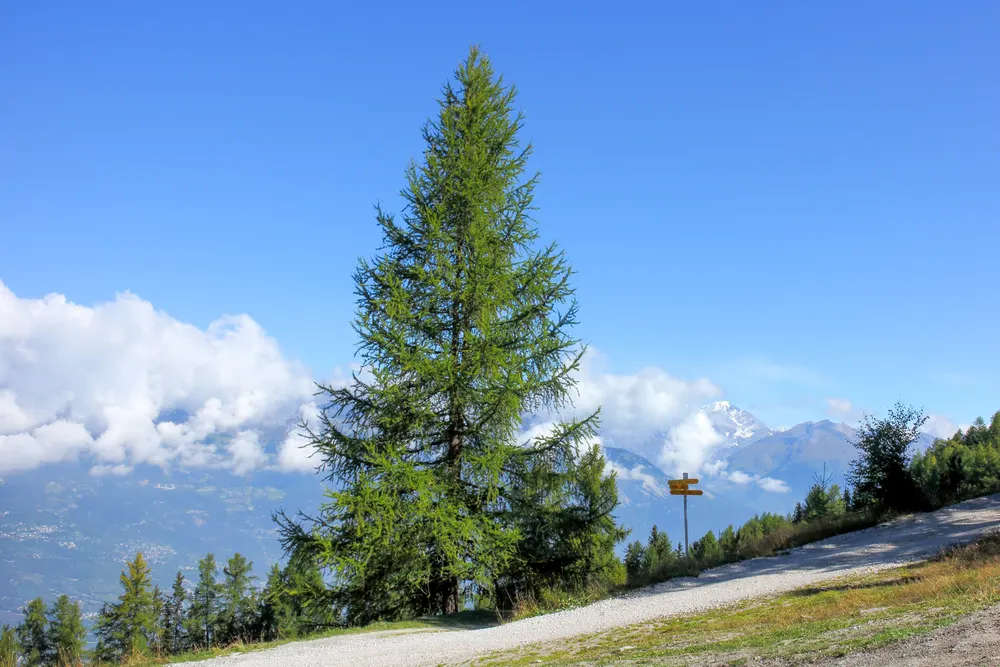
Photo: Dominicus Johannes Bergsma, CC BY-SA 4.0 (via Wikimedia Commons)
European Larch
Larix decidua
Also known as Common Larch, Larch Turpentine Tree, Venice Turpentine Tree
Key benefits
✦Traditional uses
✦In the villages of the Alps, the European larch was as much a medicine chest as it was a source of timber and turpentine. Herders and woodcutters tapped its trunk for the fragrant resin known as Venice turpentine, rubbing it into aching chests and stiff joints after long days in the cold. A tea from the young needles or inner bark was kept on hand through the winter for coughs and head colds, valued for its bright, resinous scent as much as its warming effect. The tree's habit of dropping its needles each autumn, unlike its evergreen relatives, made it feel almost animal in its seasons, a conifer that breathed with the year.
How to grow & use it
✦The full apothecary for European Larch
Traditional remedies and step-by-step preparations, a complete growing guide, and how to harvest, dry, and store it, all unlocked with HerbLens Unlimited.
- ✦Remedies & preparations
- ✦ Growing guide
- ✦Harvest & storage
From under $6 a month. Free plant identifications always included.
- ✦Pine needle
- ✦Thyme
- ✦Elderflower
- ✦Scots pine needle
- ✦Fir needle
“For the kind of cold that settles deep in the chest, when you want something that smells like a mountain forest after rain.”
European larch is one of the very few conifers in the world that is truly deciduous, turning a soft gold each autumn and dropping every needle, only to leaf out again bright green each spring.
Larch resin and turpentine are for external use only and shouldn't be ingested, as they can irritate the mouth and throat. Patch test first, since some people develop skin irritation from the resin.