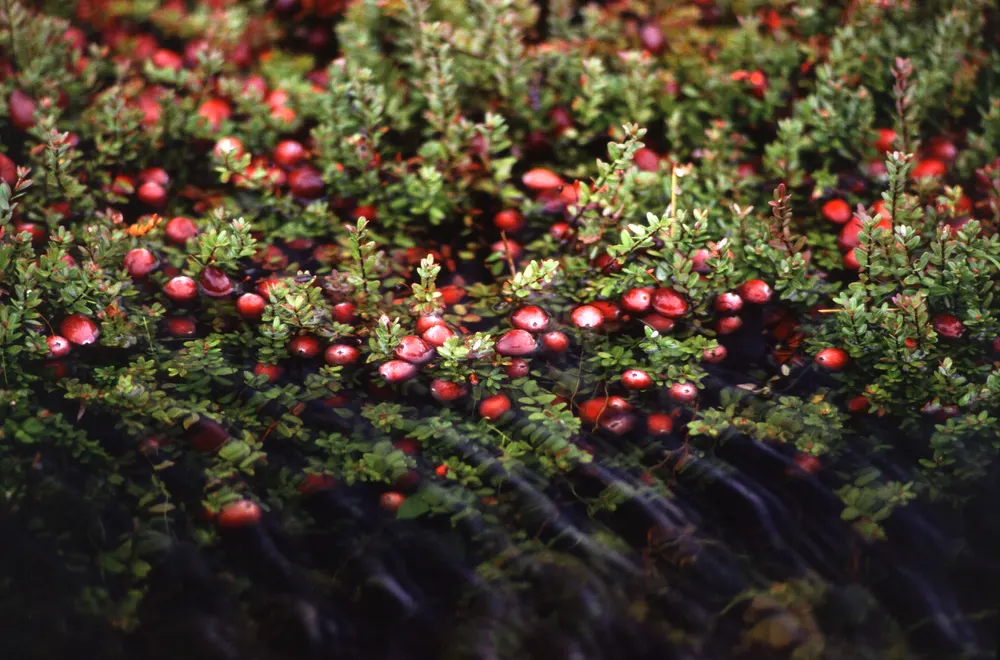
Photo: Photo by Keith Weller, Public domain (via Wikimedia Commons)
Cranberry
Vaccinium macrocarpon
Also known as American Cranberry, Bog Cranberry, Large Cranberry, Marsh Apple
Key benefits
✦Traditional uses
✦Long before cranberry juice lined grocery shelves, Wampanoag, Chippewa, and other Northeastern peoples gathered wild cranberries from the bogs for food, dye, and medicine, mashing the tart berries into poultices for wounds and arrow injuries and brewing them to ease bladder complaints. Colonial sailors came to prize cranberries alongside citrus as a defense against scurvy on long voyages, since the berries kept well in barrels of water through a whole winter at sea. By the 1800s, cranberry sauce had become a fixture of the harvest table, but the plant's older reputation as a tart, cooling remedy for the urinary tract persisted quietly in home medicine cabinets even as it became a holiday condiment.
How to grow & use it
✦The full apothecary for Cranberry
Traditional remedies and step-by-step preparations, a complete growing guide, and how to harvest, dry, and store it, all unlocked with HerbLens Unlimited.
- ✦Remedies & preparations
- ✦ Growing guide
- ✦Harvest & storage
From under $6 a month. Free plant identifications always included.
- ✦Hibiscus
- ✦Dandelion Leaf
- ✦Uva Ursi
- ✦Bilberry
- ✦Hibiscus
“A tart, ruby jewel from the northern bogs, kept close for the cold season ahead.”
Ripe cranberries hold four small pockets of air inside each berry, which is why they float and bounce, and why growers have long flooded their bogs at harvest time to skim the berries off the water's surface.
Whole, unsweetened cranberries are a safe, everyday food. Concentrated products like juice or extract can interact with blood thinners such as warfarin, and those prone to kidney stones should watch intake because of the fruit's oxalate content.