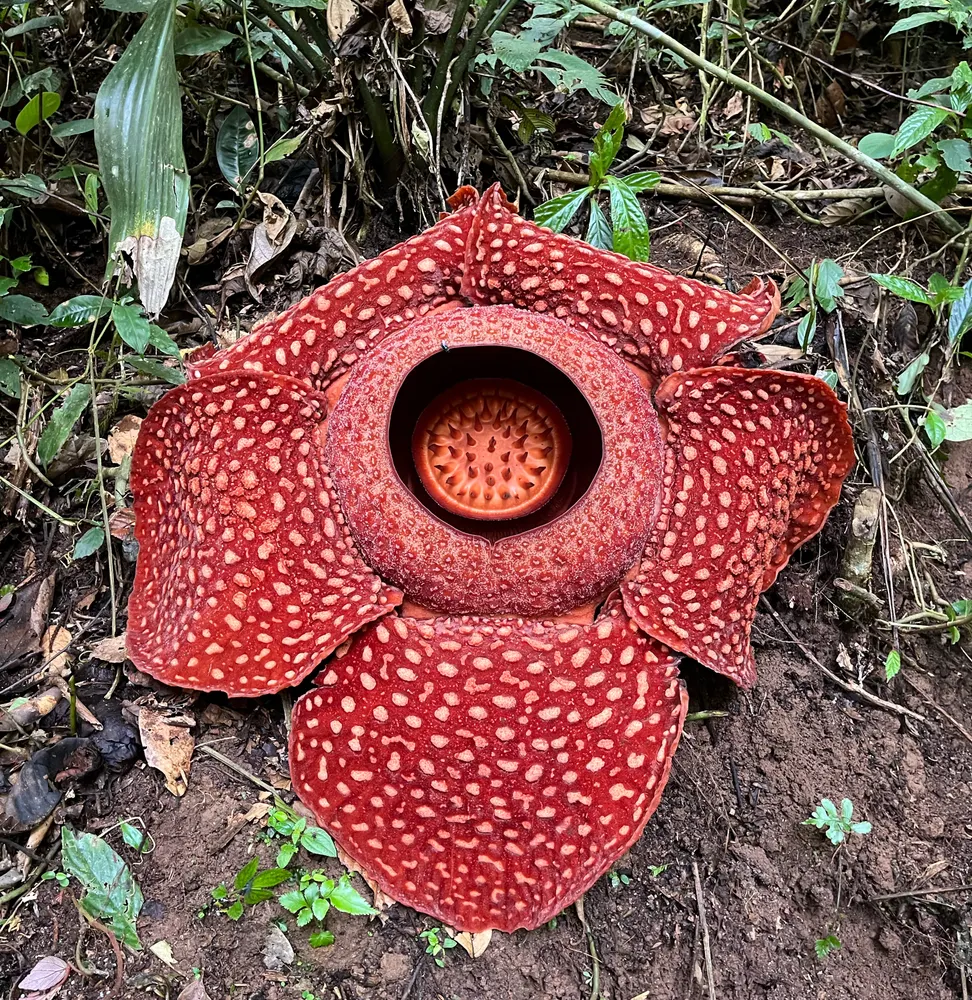
Photo: LukeTriton, CC BY-SA 4.0 (via Wikimedia Commons)
Corpse Lily
Rafflesia arnoldii
Also known as Stinking Corpse Lily, Giant Padma, Monster Flower, Padma Raksasa
Key benefits
✦Traditional uses
✦Rafflesia arnoldii is less an herb than a marvel, a flower so improbable that the naturalist Joseph Arnold, who documented it on a Sumatran expedition in 1818 alongside Sir Stamford Raffles, struggled to convince colleagues back home it was real. In parts of Sumatra and Borneo, the unopened bud has occasionally held a place in local folk tradition, gathered on rare occasions as a restorative for women recovering from childbirth. Because the plant is so scarce, so slow to bud, and now protected across much of its range, this was always an occasional, almost ceremonial practice rather than an everyday remedy. Today the greater tradition is one of witness rather than harvest, travelers and villagers alike tracking rumors of a bud about to open so they can see it bloom before it collapses into decay within the week.
How to grow & use it
✦The full apothecary for Corpse Lily
Traditional remedies and step-by-step preparations, a complete growing guide, and how to harvest, dry, and store it, all unlocked with HerbLens Unlimited.
- ✦Remedies & preparations
- ✦ Growing guide
- ✦Harvest & storage
From under $6 a month. Free plant identifications always included.
“For the rare, strange, and untamable corners of the plant world, not for the teacup.”
Rafflesia arnoldii has no leaves, stem, or roots of its own; the entire plant lives invisibly as threads of tissue inside its host vine for years, and the giant bloom is the only part that ever appears above ground, unfurling for barely a week before rotting away.
There's no reliable dosing information or established herbal use for Rafflesia arnoldii, so no part of it should be gathered or ingested. It's also increasingly rare and protected across much of its native range, so collecting a specimen is discouraged and, in some areas, unlawful.